The Graft
I learnt how to ride a bike on New Year’s Day.
The obvious New Year’s resolution for my fumbling presence in adulthood—hollering and stumbling around a public green on a purple bike—removed some of the shame that had stopped me from learning to ride as a child. Being an adult who doesn't know how to ride a bike is a lot less embarrassing than using a Tinker Bell one at eight. Legs pushing down on pedals I’ve never met before.
This week I fell off my bike onto a flat shared path. I tried to adjust the glasses falling down my face and, with only one hand holding on, I swerved to the right; then swerved even harder to avoid crashing into a girl passing by. Understandably, she was shaken by the sight of a grown adult (who seemed proficient in passing at a comfortable distance) suddenly falling into a crumpled mess, face scraping the pavement right before her feet. Oops.
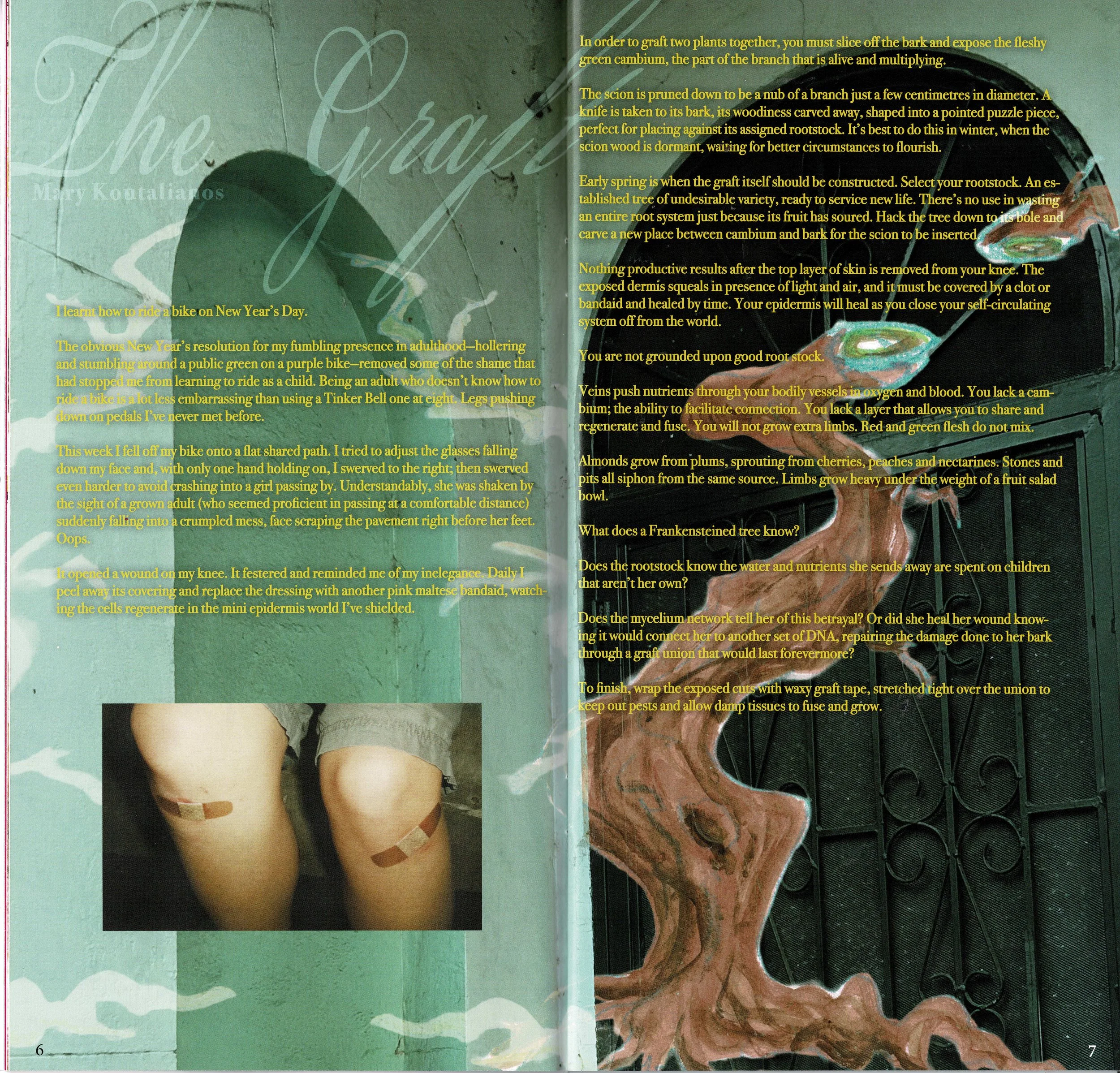
It opened a wound on my knee. It festered and reminded me of my inelegance. Daily I peel away its covering and replace the dressing with another pink maltese bandaid, watching the cells regenerate in the mini epidermis world I've shielded.
In order to graft two plants together, you must slice off the bark and expose the fleshy green cambium, the part of the branch that is alive and multiplying.
The scion is pruned down to be a nub of a branch just a few centimetres in diameter. A knife is taken to its bark, its woodiness carved away, shaped into a pointed puzzle piece, perfect for placing against its assigned rootstock. It's best to do this in winter, when the scion wood is dormant, waiting for better circumstances to flourish.
Early spring is when the graft itself should be constructed. Select your rootstock. An established tree of undesirable variety, ready to service new life. There's no use in wasting an entire root system just because its fruit has soured. Hack the tree down to its bole and carve a new place between cambium and bark for the scion to be inserted.
Nothing productive results after the top layer of skin is removed from your knee. The exposed dermis squeals in presence of light and air, and it must be covered by a clot or bandaid and healed by time. Your epidermis will heal as you close your self-circulating system off from the world.
You are not grounded upon good root stock.
Veins push nutrients through your bodily vessels in oxygen and blood. You lack a cambium; the ability to facilitate connection. You lack a layer that allows you to share and regenerate and fuse. You will not grow extra limbs. Red and green flesh do not mix.
Almonds grow from plums, sprouting from cherries, peaches and nectarines. Stones and pits all siphon from the same source. Limbs grow heavy under the weight of a fruit salad bowl.
What does a Frankensteined tree know?
Does the rootstock know the water and nutrients she sends away are spent on children that aren’t her own?
Does the mycelium network tell her of this betrayal? Or did she heal her wound knowing it would connect her to another set of DNA, repairing the damage done to her bark through a graft union that would last forevermore?
To finish, wrap the exposed cuts with waxy graft tape, stretched tight over the union to keep out pests and allow damp tissues to fuse and grow.