
“We will return when the war is over”: Don't Ask the Trees for Their Names at Sydney Opera House
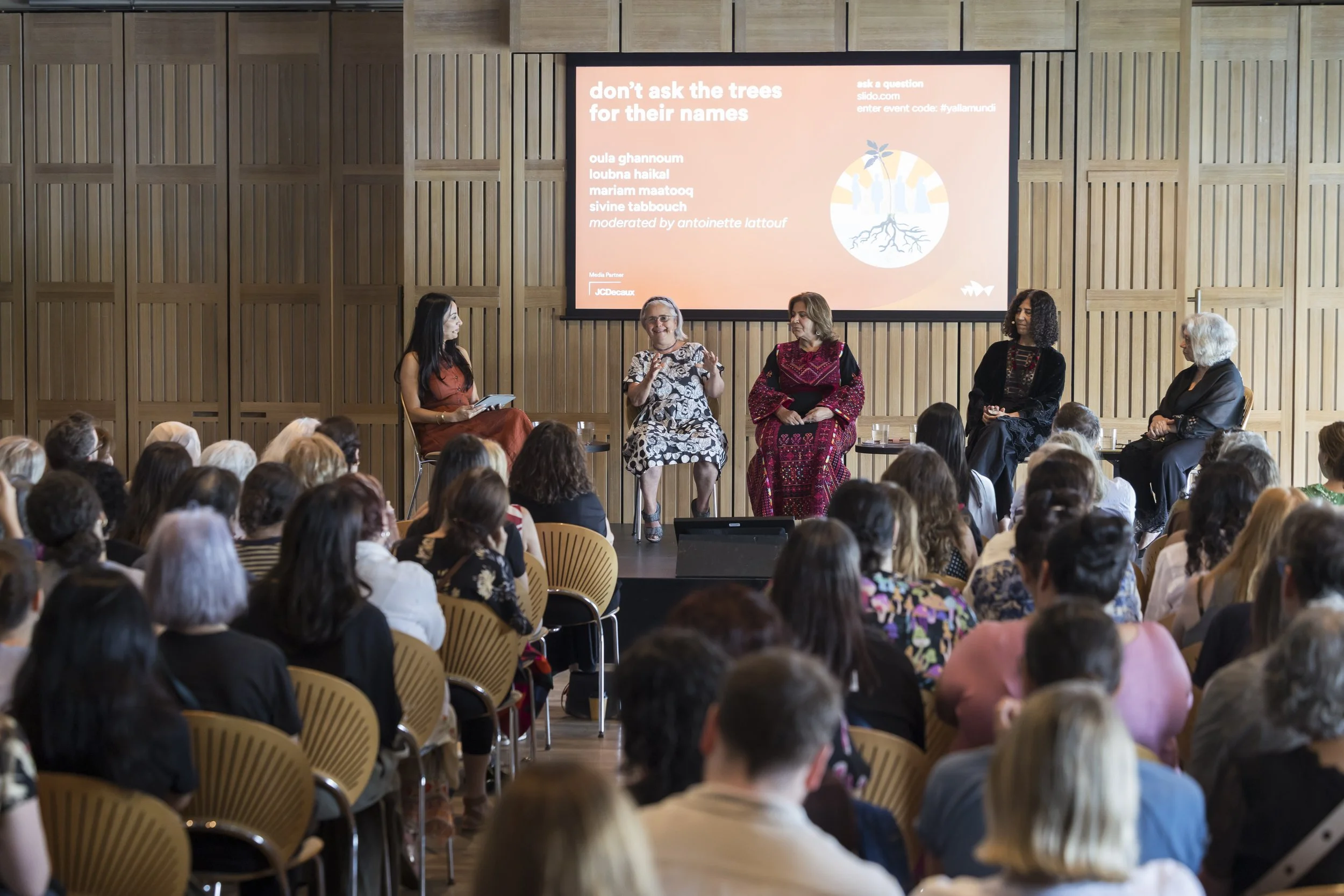
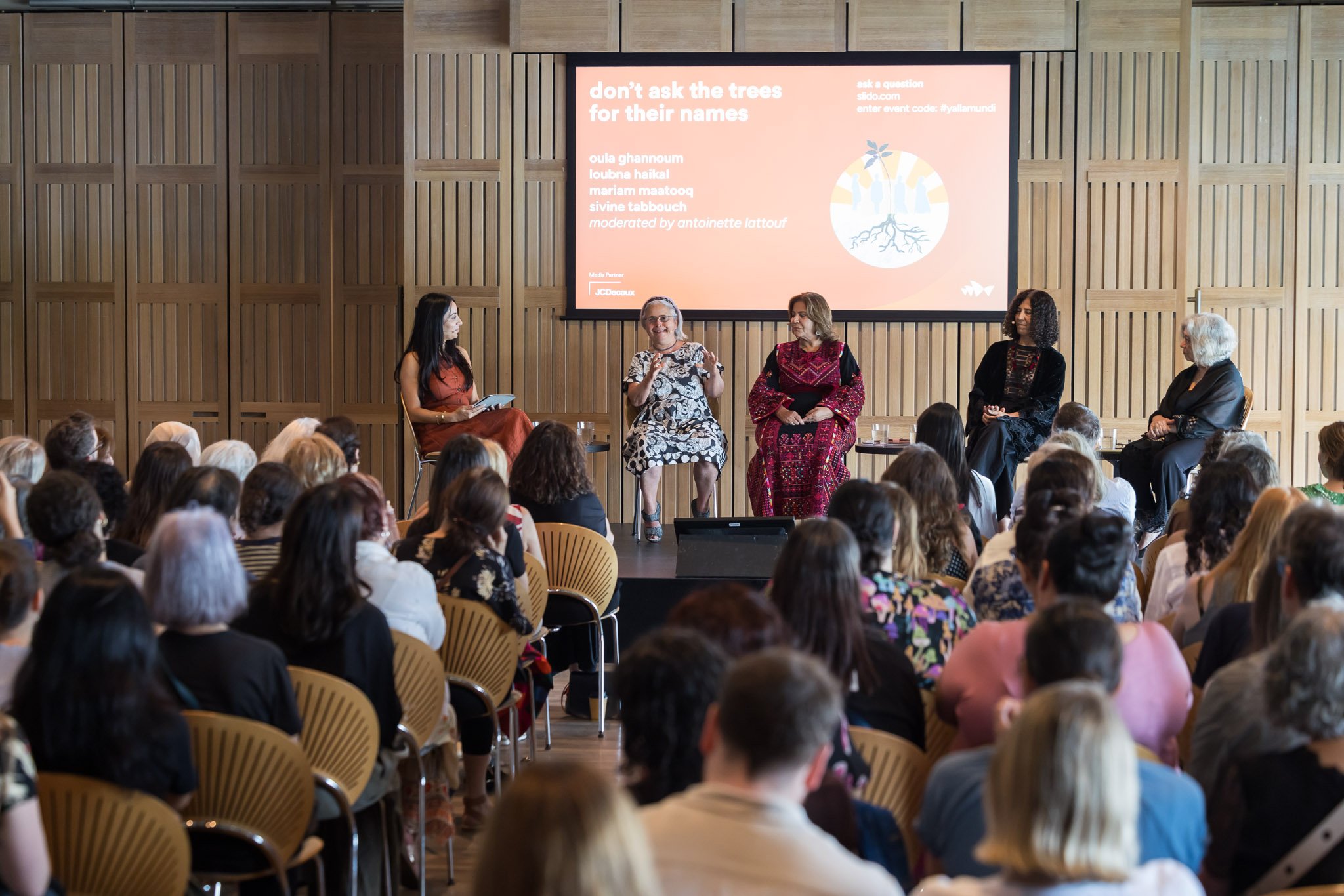
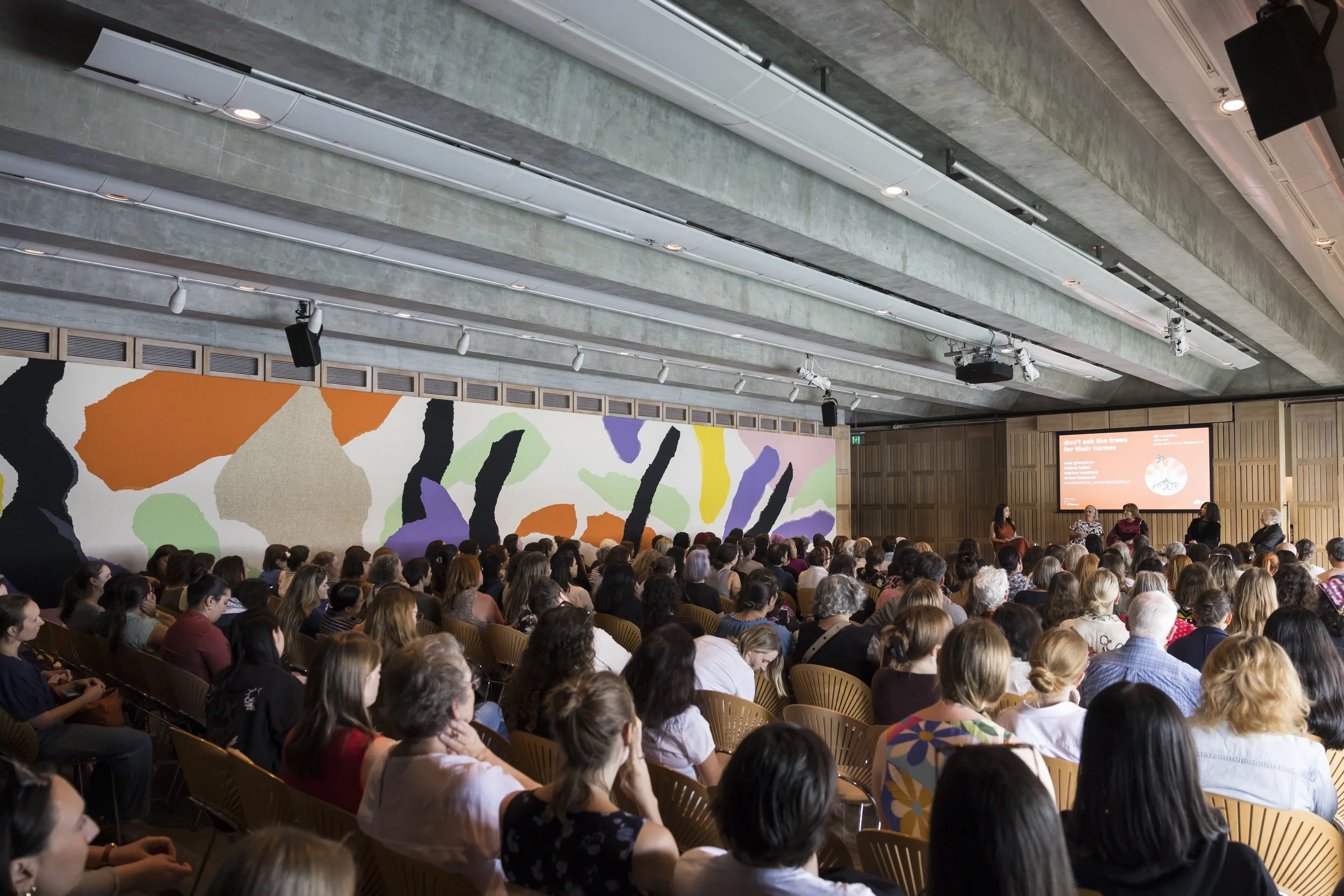
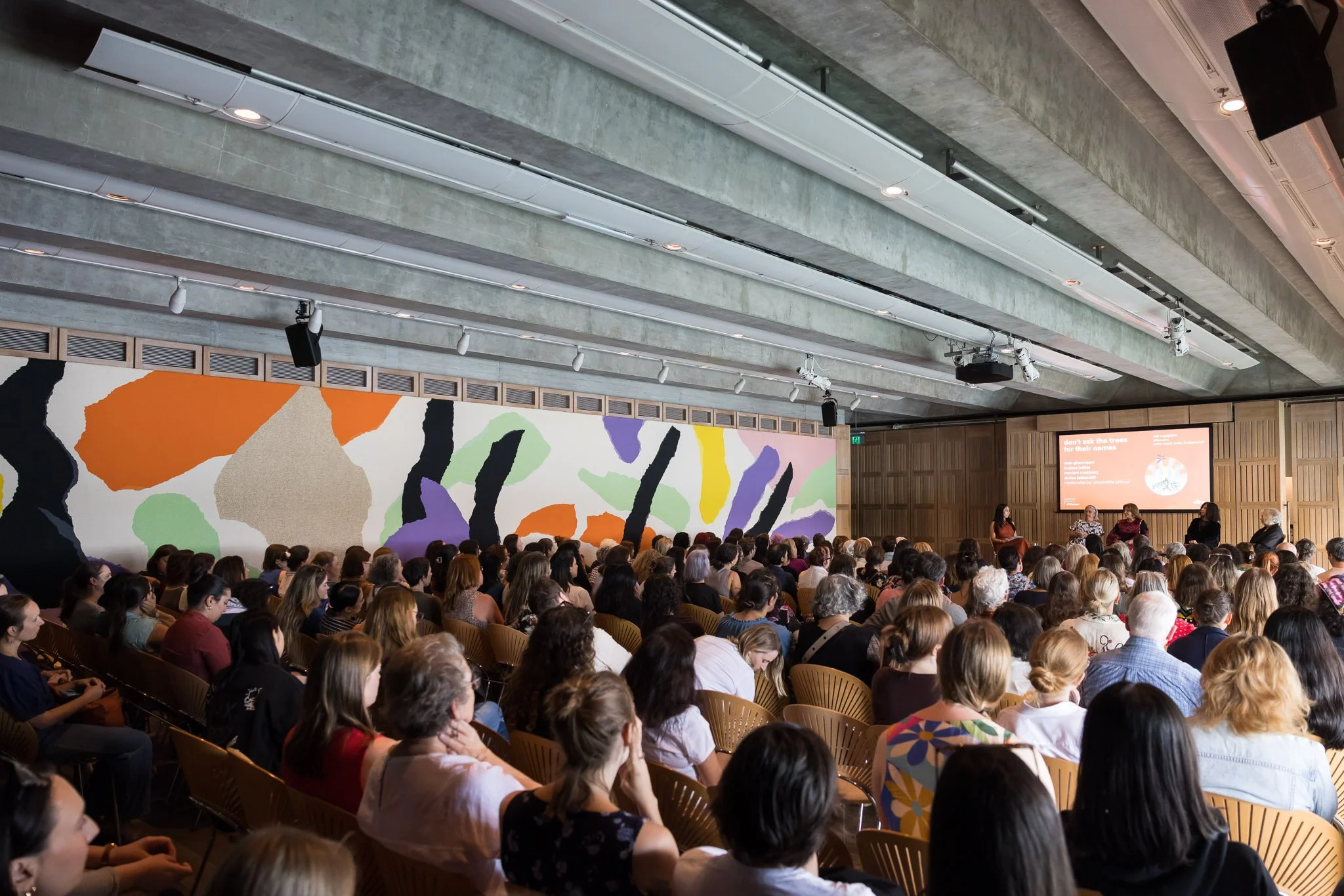
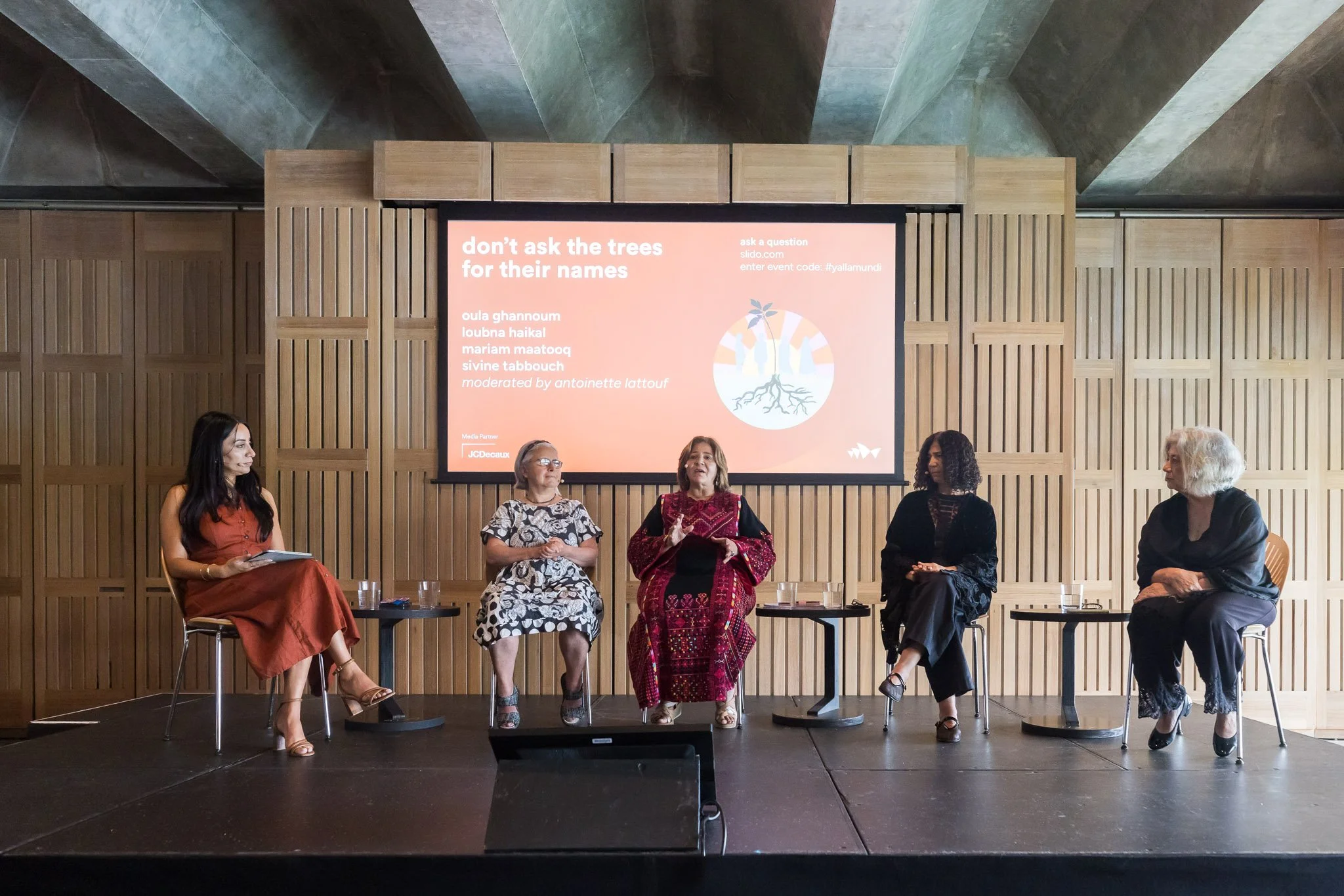
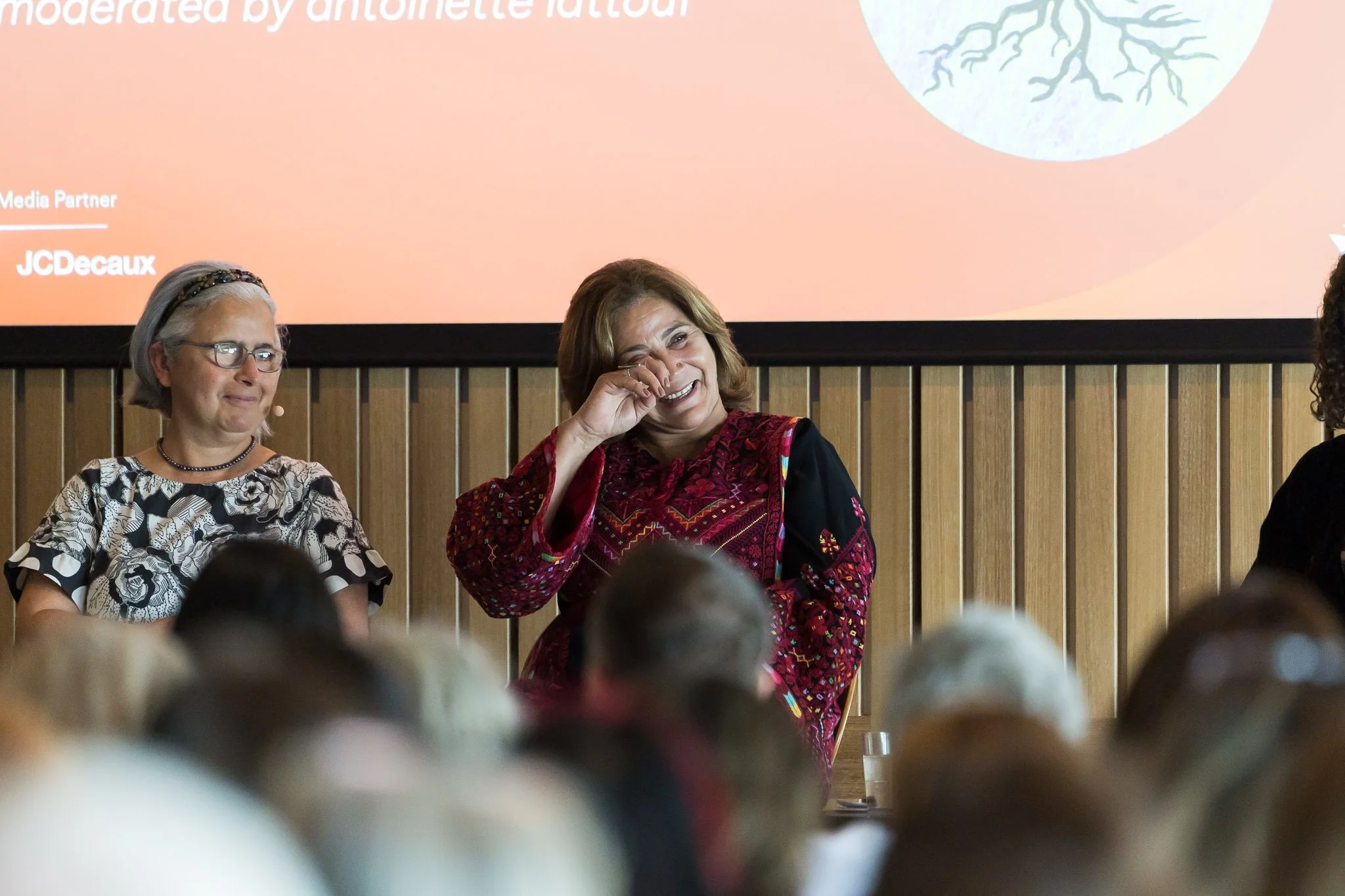
All About Women took place at the Sydney Opera House on Sunday 8 March.
I arrived at the Sydney Opera House just as the room was filling, slipping into my seat while people were still moving down the aisles and folding themselves into the last empty rows. Even before the discussion began, there was a seriousness to the atmosphere. The audience settled quickly. Conversations dropped off. By the time Antoinette Lattouf introduced the anthology published in 2025, Don’t Ask the Trees for Their Names, the room had already taken on an air of quiet concentration.
The anthology gathers the stories of nine Arab-Australian women reflecting on migration, displacement, and belonging, and the panel brought together contributors Oula Ghannoum, Mariam Maatooq, Sivine Tabbouch, and Loubna Haikal. Over the course of the evening, the discussion moved through family history, racism, exile, memory and political responsibility. What stayed with me most was the way each speaker gave shape to migration as an ongoing condition. Their stories returned again and again to the long aftermath of arrival, and the effort involved in making a life in a country that does not always know how to receive you.
One of the strongest threads in the discussion was the idea of temporary exile. Several of the speakers described arriving in Australia with the understanding that they would eventually return home. That belief seemed to structure their relationship to the present. Australia was where life was happening, yet for years they had not pictured it as the place life would stay.
Sivine Tabbouch spoke about arriving during the Lebanese civil war and growing up with the promise that her family’s time in Australia would be brief. “We will return when the war is over,” she recalls her mother saying. The sentence stayed with her into adolescence and beyond.
“Whenever I faced a challenge,” she explains, “it became my quiet reassurance. The phrase I returned to, telling myself this was only temporary.”
There was something especially affecting about hearing this spoken in the Opera House, perhaps because it distilled so much of the emotion the panel was circling around. Migration often gets narrated as a decisive movement from one country to another, as though there is a clean before and after. The women on this panel described a much less settled reality. They spoke about living in suspension.
That uncertainty sharpened when the conversation moved to childhood. Tabbouch described arriving in Australia as a twelve-year-old and entering a school environment where belonging was immediately legible. “You could immediately see who belonged and who didn’t,” she said. The cruelty she encountered was familiar in the way many forms of Australian racism are familiar: schoolyard insults, suspicion, the demand to explain yourself, the command to leave.
“There was bullying, there was name calling. Words like ‘wog’. And of course the famous sentence: ‘go back to where you came from.’”
The force of her reflection came from the gulf between what she had lived through and what the people around her were able, or willing, to imagine. She remembered wanting to explain the war she had seen in Lebanon, wanting to answer those taunts with the truth of what going back would mean.
“I wanted to tell them I saw bombs exploding opposite our building. I wanted to tell them I saw people burned alive,” she said. “I wanted to tell them that if I went back, I would probably die.”
The room became very still after that. It was one of several moments in the evening where the audience seemed to move beyond polite attentiveness into something heavier. The panel’s power came partly from those shifts in feeling. You could sense the distance collapsing between public discussion and private reflection. The stories being shared onstage asked the audience to sit with the emotional reality of migration rather than the flattened idea that often circulates in public discourse.
Another theme that ran strongly through the event was misrecognition. Again and again, the speakers described the experience of being perceived through stereotype, simplification or ignorance, and they spoke with precision about what that kind of distortion does over time.
Loubna Haikal’s memories of arriving in Melbourne in the late 1960s carried some of the evening’s sharpest observations. She recalled the repeated task of explaining where Lebanon was to classmates who had never heard of it. Eventually she learned to locate herself through places they might know. If Lebanon meant nothing, she would say it was above Palestine. If that failed, she would say, “where Jesus was born.” The line landed with wit. It also revealed the exhausting practical intelligence migrants are so often required to develop, translating themselves into terms other people can recognise.
That frustration deepened when the panel turned to the representation of Arab women. Oula Ghannoum spoke directly about the stakes of the anthology, describing the book as a way of pushing back against the scripts that have historically defined Arab women in Western public culture. “As Arab women we have not had a voice,” she said.
“We have been represented as oppressed, as downtrodden, as invisible.” Later, she distilled the ambition of the book with more warmth and force: “This was our opportunity to humanise ourselves. We are funny. We are strong. We are successful. Clever and curious and everything.”
That idea of storytelling as humanisation sat at the centre of the evening. The panel made clear that memoir and testimony challenge the way migrant lives are understood in Australia. The book’s significance lies partly in that refusal to be reduced. It insists on interiority, contradiction, humour, grief and intelligence.
The most intellectually arresting part of the discussion came when Ghannoum reflected on arriving in Australia without understanding the history of Indigenous dispossession. “When I immigrated to Australia, I knew nothing of the plight of Indigenous peoples,” she said. As her awareness grew, so did a difficult moral tension.
“Eventually I came to understand that those who granted me the right to live here were not the original custodians of the land.” Then came the question that seemed to hang over the room for several seconds after she asked it: “Sometimes I ask myself, does my presence here make me complicit with the settlers?”
It was the point in the evening where the discussion widened most dramatically. Migration, in this framing, became part of a larger ethical and historical landscape. Belonging in Australia carried its own uneasy implications. Ghannoum spoke about Palestinian dispossession alongside Indigenous dispossession in Australia, drawing the two into relation without collapsing their differences. Her reflection gave the discussion a political complexity that many conversations about migration never reach.
By the end of the night, the room had softened into that recognisable post-event hush where applause comes easily but conversation takes a few minutes to return. When asked what gives her hope, Ghannoum answered with one word:
“Dialogue.”
It was a simple ending, though not a slight one. That word gathered up much of what the evening had achieved. The discussion created a space where stories that are often sidelined could hold the room at full attention. Don’t Ask the Trees for Their Names felt like an argument for storytelling as a public act, one that can widen the terms through which a country understands migration, identity and itself.
An impression that lingered with me after leaving the Opera House was the seriousness with which the audience had listened. In a cultural moment that often rewards speed and the easy summary, this discussion asked for patience. It asked people to remain with complexity. That felt rare, and worth noticing.