
Fawn
The pale man watches as I ride my bike across the street. Up and down and up and down for hours, for long, long days. In the bushes he appears as a flower, the deep blue of his garments a flame. He strokes himself with one hand in the open air where I can see. The other holds a finger to his lips. There is a whole lot of sunlight draping over this afternoon. It disperses through the gum leaves like dust. He reminds me of a white rabbit, the way his irises glow. The hot globe of his eye casts a stream that reaches me through the fog.
***
My mother wanted to go on a trip every summer when I was growing up. We did not have a car, nor stable finances, and my father could never muster the energy. They moved to Australia many years ago and never stopped working. Now my father takes me on our first family holiday, to a village near Port Hacking River, in a second hand car perspiring in the morning dew.
My father booked this trip last January to accommodate three. Now we are two. He ignores this, I forget this, and when the heat sticks to my eyelids, I press them closed.
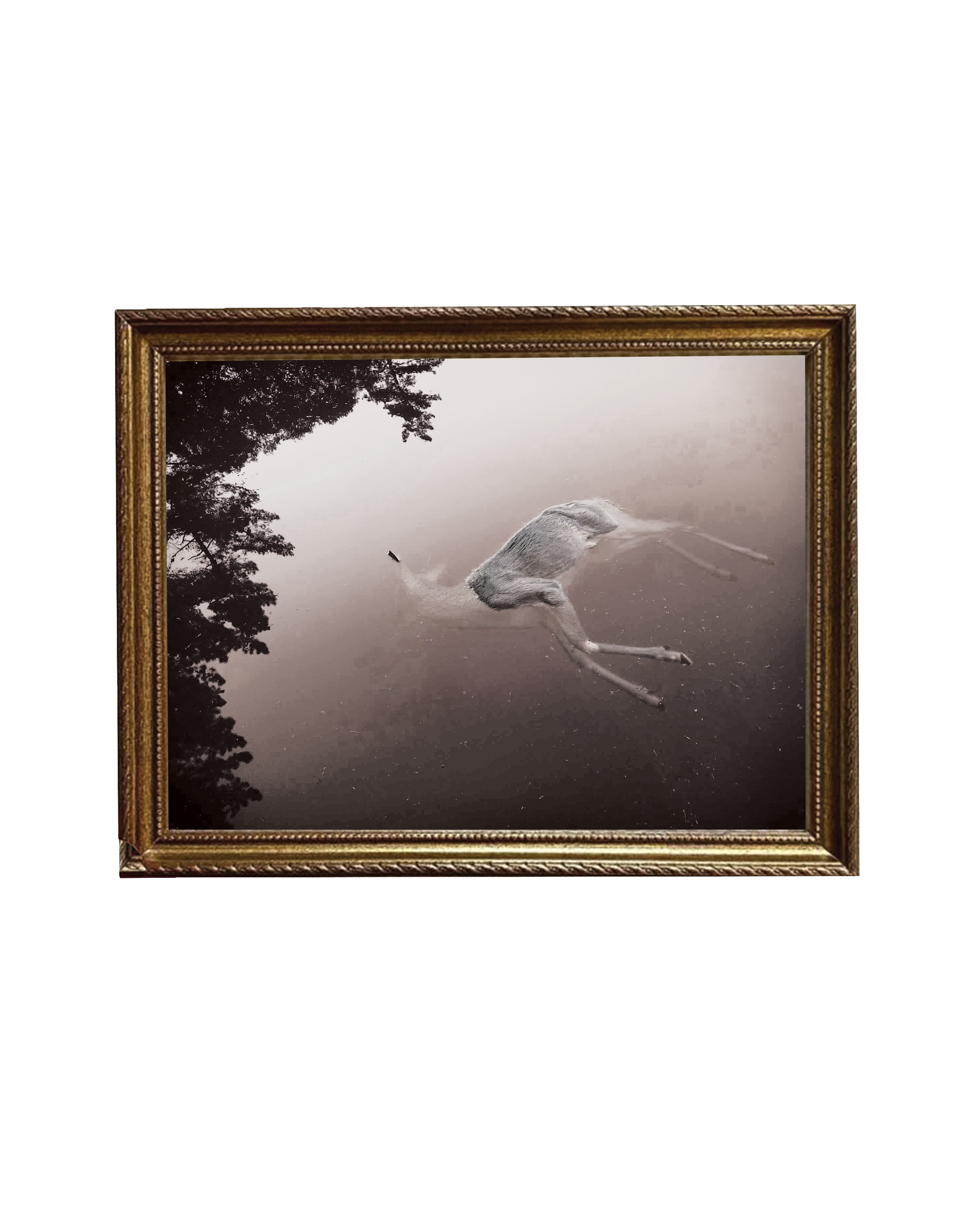
I dream of a deer drowsing, just like me, supine on the side of the road. I don’t know how I know it’s a deer because the figure in the vegetation has no head, but I wait to glimpse the curve of antlers. Sunlight sprouts from the pricks of oil along its skin. It’s only when my window slides up to the cavity of its neck that I realise it's swarmed by blowflies. When I wake up, we’re already at the motel. The collar of my shirt is soaked.
***
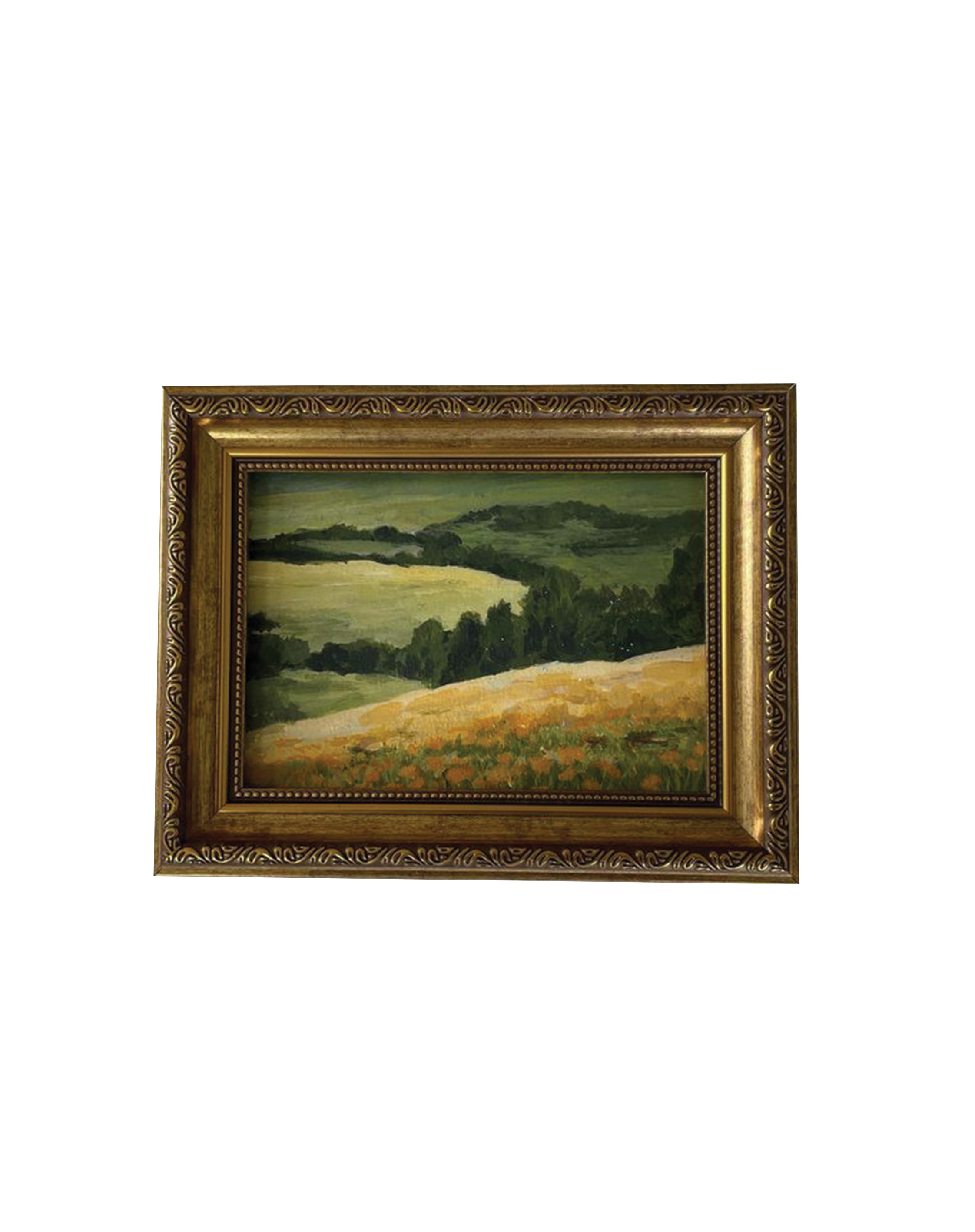
The corridors of the motel are lined with a long river of landscape paintings. Inside the heavy gold frames are sand spits gird by green water and small heads of the banksia scrub blurring in the breeze. It’s hard to find an eye in a single one of them; I scrutinise them while my father pleads with the blonde woman at the front desk. It’s a game I used to play with my mother while waiting for the bus after school. My teachers had informed her that I struggled with the wide reach of an open eye in the schoolyard, so my mother wanted me to start catching as many as I could. Closed eyes, she said, were no good. I spot the white iris of a honeyeater as our keycards are turned over. It imparts onto me its quiet state of paralysis.
In our motel room, our two beds are next to each other; mine is a single and my father’s is a double. The double bed is right beside a window which opens into the blushing sea. The scraps of light caught in the tide move strangely. I see the shadow of dark heads darting through the water.
“I had a bad dream on the way here,” I shout. My father is in the kitchen.
“A deer was on the roadside.”
My ears fill with the roar of water leaping from a pipe somewhere. My father cuts the sound—a tap. “What did you say?”
“The deer in my dream. It looked like it was breathing, but when we passed it, it was dead.”
“That wasn’t a dream,” he says. “It was real.”
“I didn’t know we had deer in Australia.”
“We shouldn't," he murmurs. “They’re invasive.”
“They invaded?”
“No; they were brought here.”
“By who?”
“The colonists.”
I don’t understand why they would do such a thing, and I say as much. My father dries his hands with a towel on the bench top.
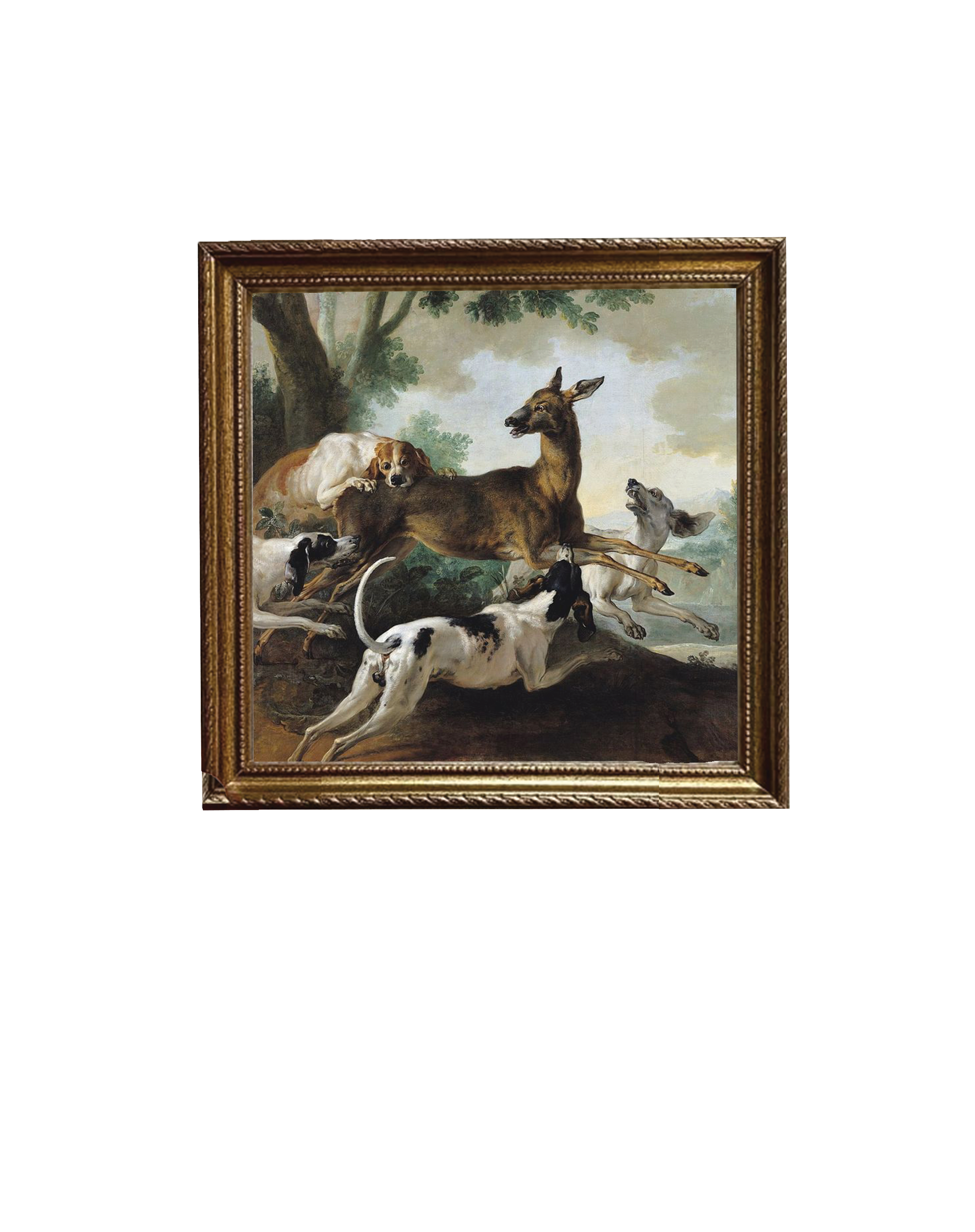
“They were brought here to be hunted,” he says.
***
In the evening my father waits out on the balcony to accept a call from my mother, so I pull my comforter over my head and search for deers on my phone. The deers in this area sound like restless creatures that sought to escape the village many times, in many ways. They waded through railway corridors half a decade ago and even swam in Port Hacking River. Considered pest animals, they are shot on the ground, or from helicopters, with semi automatic rifles. This practice is called culling. Shots may only target the heart, lungs, or brain. If shot first in the head, the deer will lose consciousness immediately. If shot first in the chest, it takes longer. I scroll through pictures of deers lying cold in the undergrowth, wearing the mark of a bullet in their temple with no blood on their coats. The severe state of the deer I witnessed makes little sense against these. Many hunters, after stalking a map of blood through the bush, even take pictures with their kills. They drape their rifles like an offering to the clean, brown body.
I tuck my nose into the beige wall as the window starts to shake. The air grows rough and salty at night. It carries shards of conversation through the window, my mother’s voice wounded over the phone. She cried immigrating here, she cried when she left to go to work, she cried when she was afraid on the street, and she cried when she found me on my bicycle in the back lane that day, alone. We packed our bags for vacation but she packed hers for a flight over the sea. She wants to go home.
In the early morning, I wake to the serrated sounds of a bird crying on the roof. I sneak the congregation of my father’s beer bottles into the back dumpster before he sobers up. We go to the beach when the day grows warmer and I keep my thongs on all the way until my toes prick the water. The sand is punctured by hundreds of tiny crab holes. My father sits in the middle of a swarm of them, pressing his palms flat over the mouths of some. It disturbs me, the thought that a crab may emerge from the lightless tunnel and begin chewing on my foot. I think of the deer, wading through a blanket of trees and catching a bullet shot between two trunks. I wonder if it
knew to look upon gaps this way. I crouch to squint into a hole some metres out of my father’s sight.
In the corner of my eye, a rabbit splits from a log like a hit marble and darts into a thicket of trees. It conducts me through a sea of green light. The sand and the sound of water eventually disappear behind me. The scrub turns my ankles raw and punctures the bare soles of my feet. I follow the tender rustle of leaves as they part against the rabbit. It shines like the bright side of the moon. The rabbit pauses before a felled tree. Something lies on the other side of it, where the blooms are shivering upon their stalks. The rabbit keeps its eyes out of reach. It hops over the long border of the trunk, and I assume, from the soft sounds of its chewing, that it’s grazing. It sounds delighted. I peer over the log to take a look for myself.
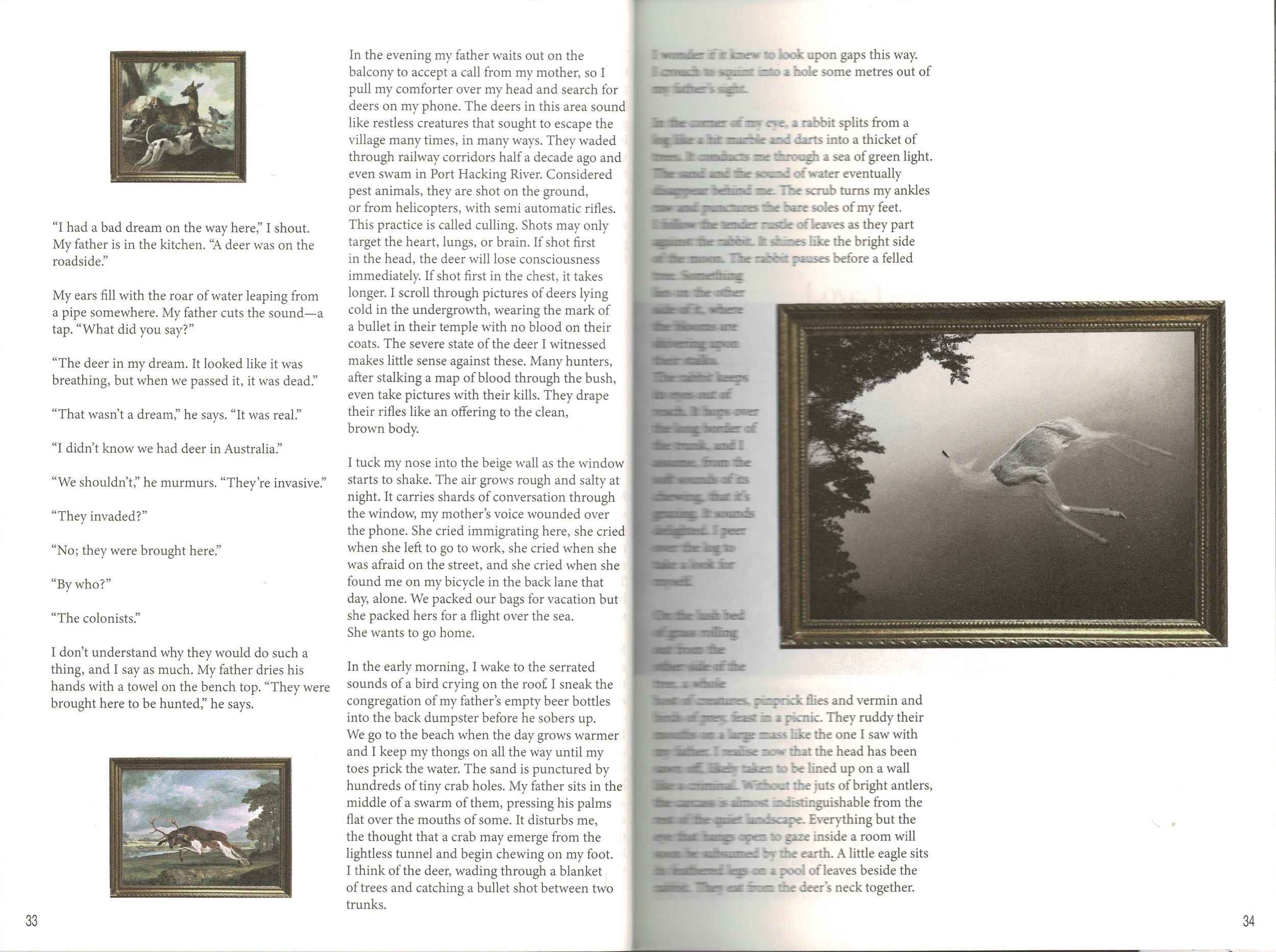
On the lush bed of grass rolling out from the other side of the tree, a whole host of creatures, pinprick flies and vermin and birds of prey, feast in a picnic. They ruddy their mouths on a large mass like the one I saw with my father. I realise now that the head has been sawn off, likely taken to be lined up on a wall like a criminal. Without the juts of bright antlers, the carcass is almost indistinguishable from the rest of the quiet landscape. Everything but the eye that hangs open to gaze inside a room will soon be subsumed by the earth. A little eagle sits its feathered legs on a pool of leaves beside the rabbit. They eat from the deer’s neck together.
Designed by Sophie Wishart