
Return to the Playground
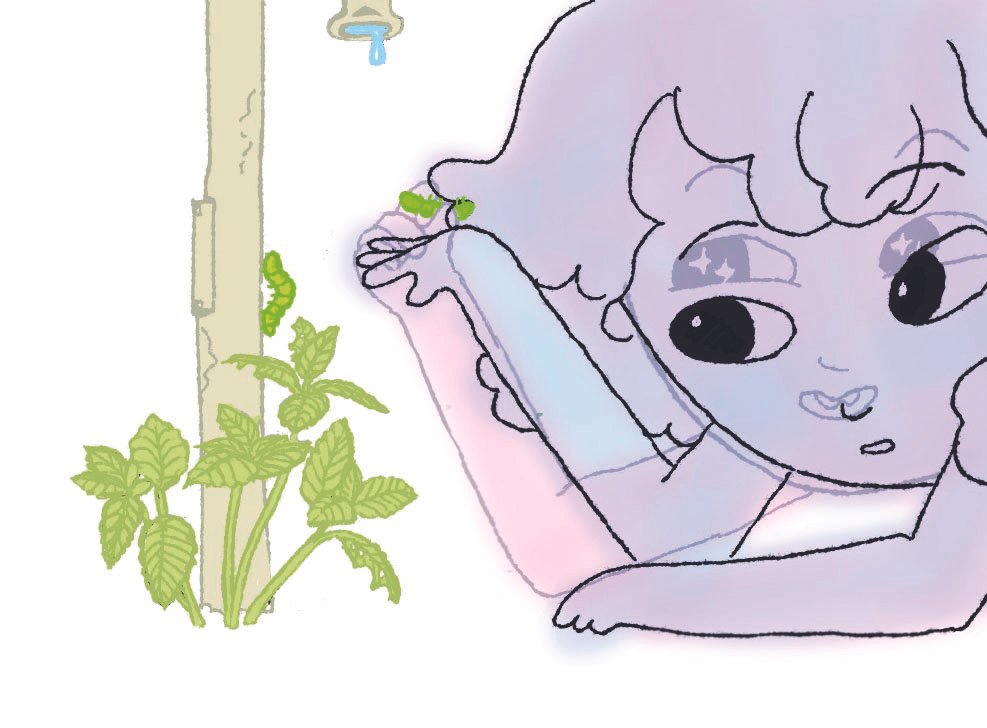
When I was little, my mum would pay my siblings and I five cents per caterpillar we found on her mint plant. In the damp soil right under the outdoor tap, the fragrant leaves thrived, twisting round the post of the tap and up the brick wall. The caterpillars, as green as the mint leaves, were difficult to spot. But that made it all the more enjoyable when you detected one, pinching its wriggling body between your thumb and index finger. Yes! Five cents!
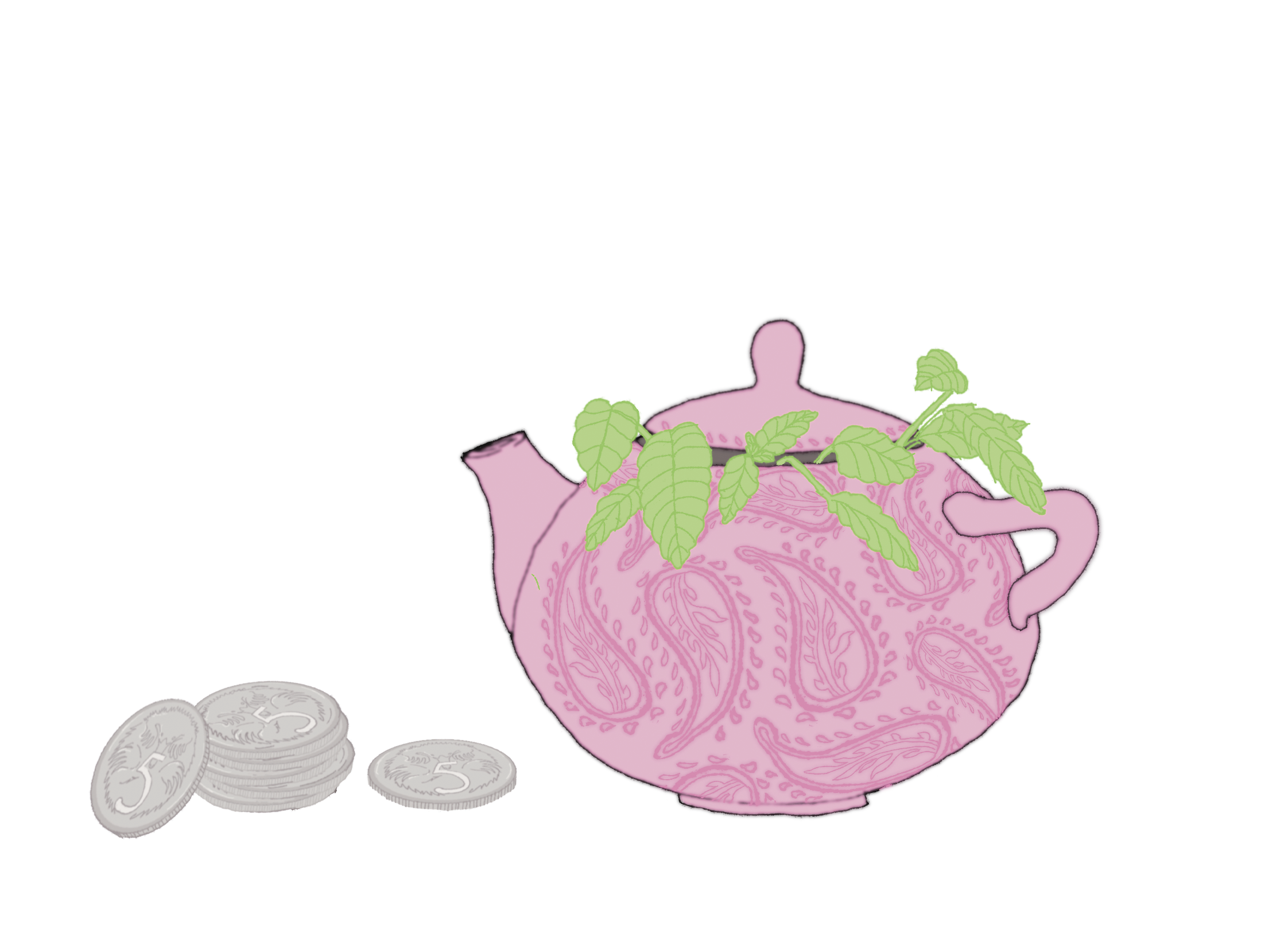
I would celebrate this win by stuffing mint leaves into my paisley-printed aluminum teapot and then filling the pot with (cold) water. Clambouring into my favourite tree, I would drink my ‘tea’ and admire the coins I had toiled for.
These simple joys threaded into the broader fabric of my mostly carefree life. At the heart of it all was play. As children, we learn through play; we are challenged, strengthen social bonds, realise creativity. But as we get older, we often find ourselves caught up in work, school, and other tasks. ‘Playtime’ is sidelined.
As I became older and five cents became an unappealing amount of money to receive for the arduous task of searching for tiny green caterpillars, I no longer wanted to help my mum. Teenagehood sunk my spirits like a lead balloon and the caterpillars munched their way through the mint. My tree stood in the park across the road. The ropes I had tied and the trinkets I had secured hung still, waiting.
Much is uncertain at the moment. The seams of our society are tearing open and pushing us further away from one another. Fear and isolation work together, producing vitriol, squandering empathy. Now, we need play more than ever. Writer and civil rights activist Maya Angelou discussed the necessity of joy in fuelling the spirit and acting as a method of resistance against oppression. In an interview, Angelou noted that “Joy is a freedom. [...] You share it! When you continue to give it away you will still have so much more of it.” Baking lovingly for friends, diving into sparkling water and munching on lukewarm watermelon, being eaten alive by mosquitos whilst chatting in the shitty backyard of your friends’ sharehouse—this reminds us of our abundance and capacity for delight. By playing, we resist the fear-fuelled notion that all is lost.
A few months ago, my friends Jess, Simeon, and I went to lunch and, after stuffing ourselves full of onigiri, we stumbled along Mary St and ended up at Camdenville Park. Newly redone, pristine swings swayed. Rope ladders moved with the breeze. Planks of wood created little balance beams to tiptoe along.
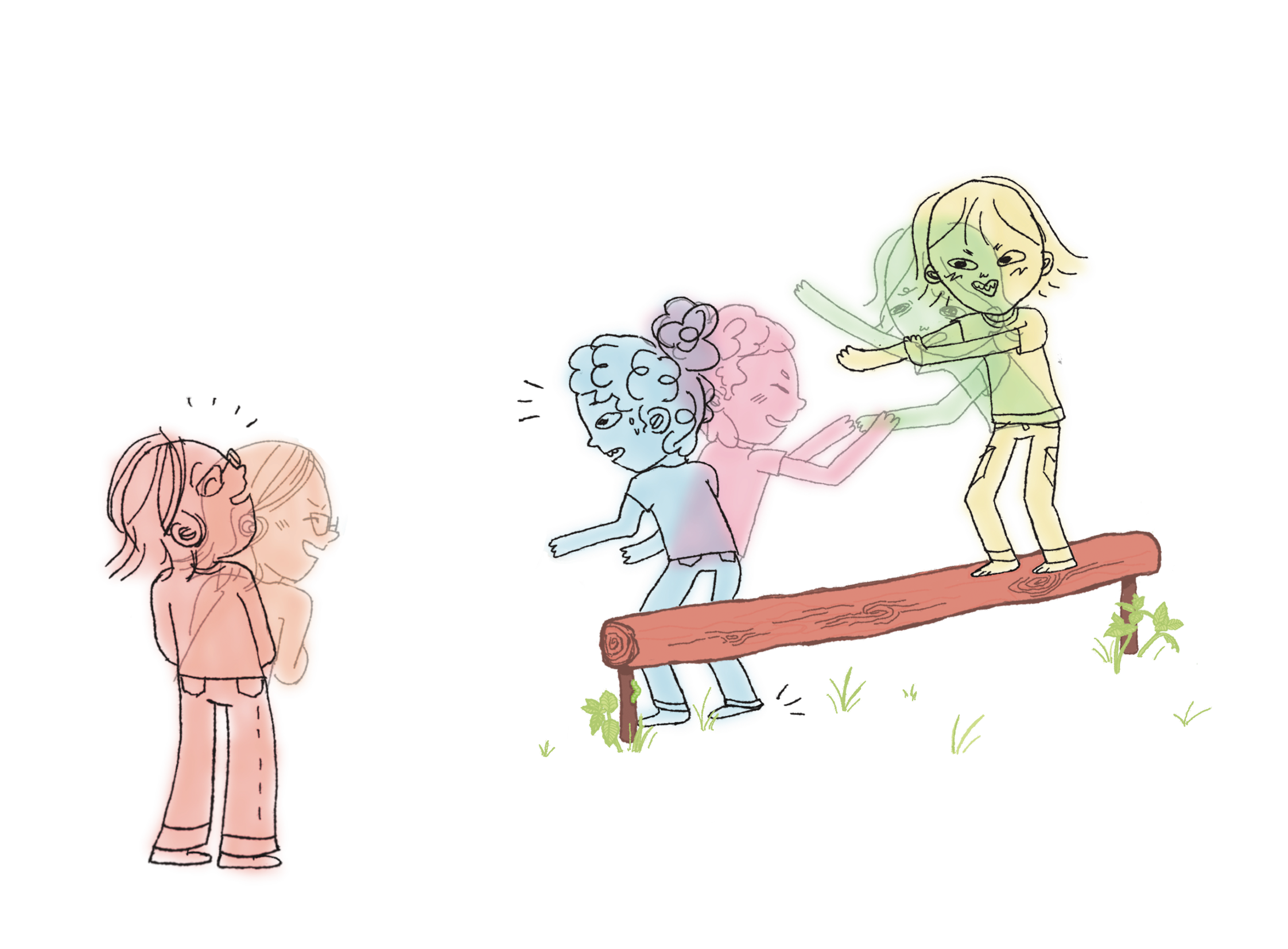
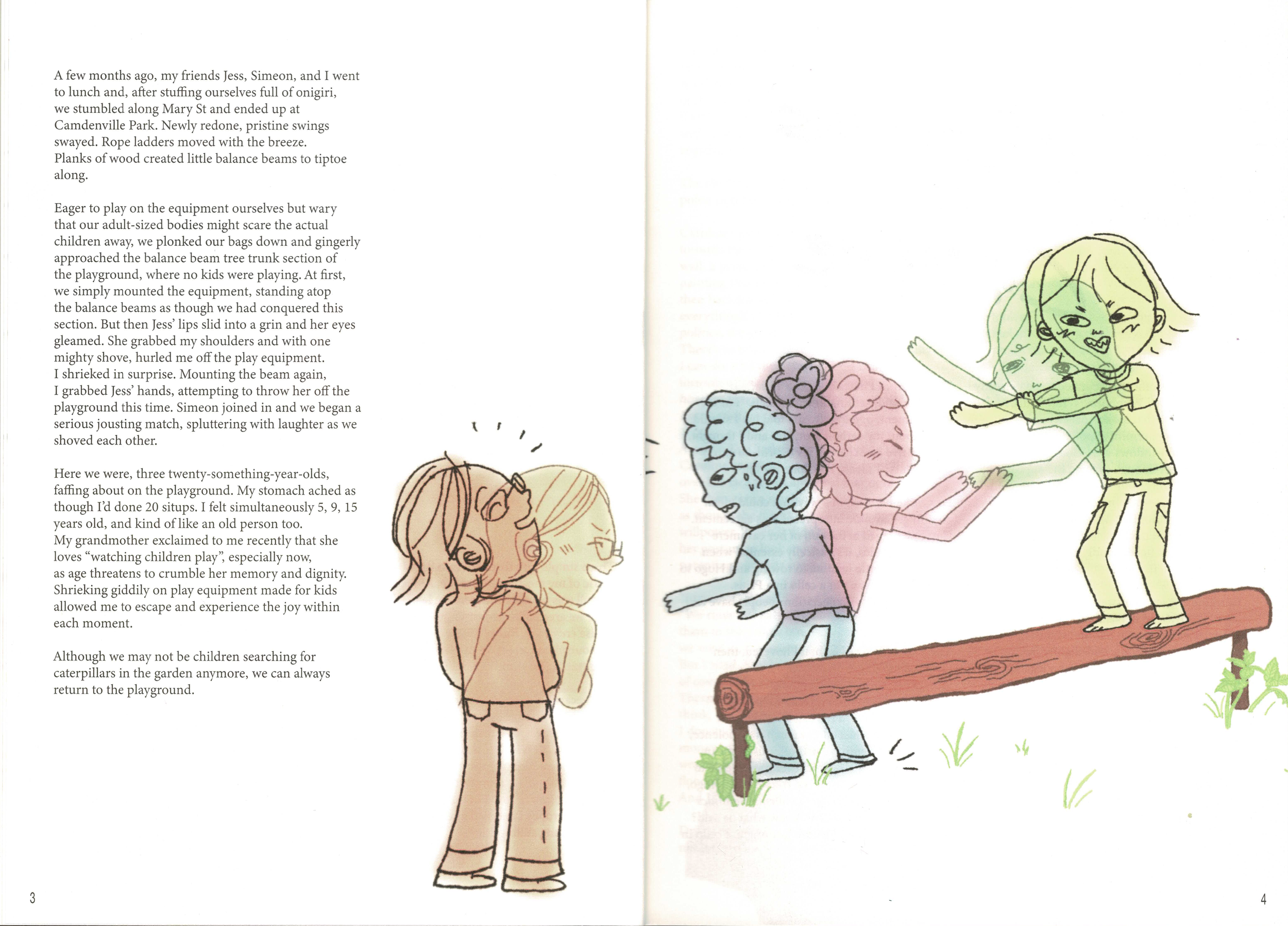
Eager to play on the equipment ourselves but wary that our adult-sized bodies might scare the actual children away, we plonked our bags down and gingerly approached the balance beam tree trunk section of the playground, where no kids were playing. At first, we simply mounted the equipment, standing atop the balance beams as though we had conquered this section of the playground. But then Jess’ lips slid into a grin and her eyes gleamed. She grabbed my shoulders and with one mighty shove, hurled me off the play equipment. I shrieked in surprise. Mounting the beam again, I grabbed Jess’ hands, attempting to throw her off the playground this time. Simeon joined in and we began a serious jousting match, spluttering with laughter as we shoved each other.
Here we were, three twenty-something-year-olds, faffing about on the playground. My stomach ached as though I’d done 20 situps. I felt simultaneously 5, 9, 15 years old, and kind of like an old person too. My grandmother exclaimed to me recently that she loves “watching children play”, especially now, as age threatens to crumble her memory and dignity. Shrieking giddily on play equipment made for kids, or watching kids play, allows us to escape and experience the joy within each moment.
Although we might not be children searching for caterpillars in the garden anymore, we can always return to the playground.
Designed by Sophie Wishart