
Alphabet Lane at Sydney Opera House: PULP reviews
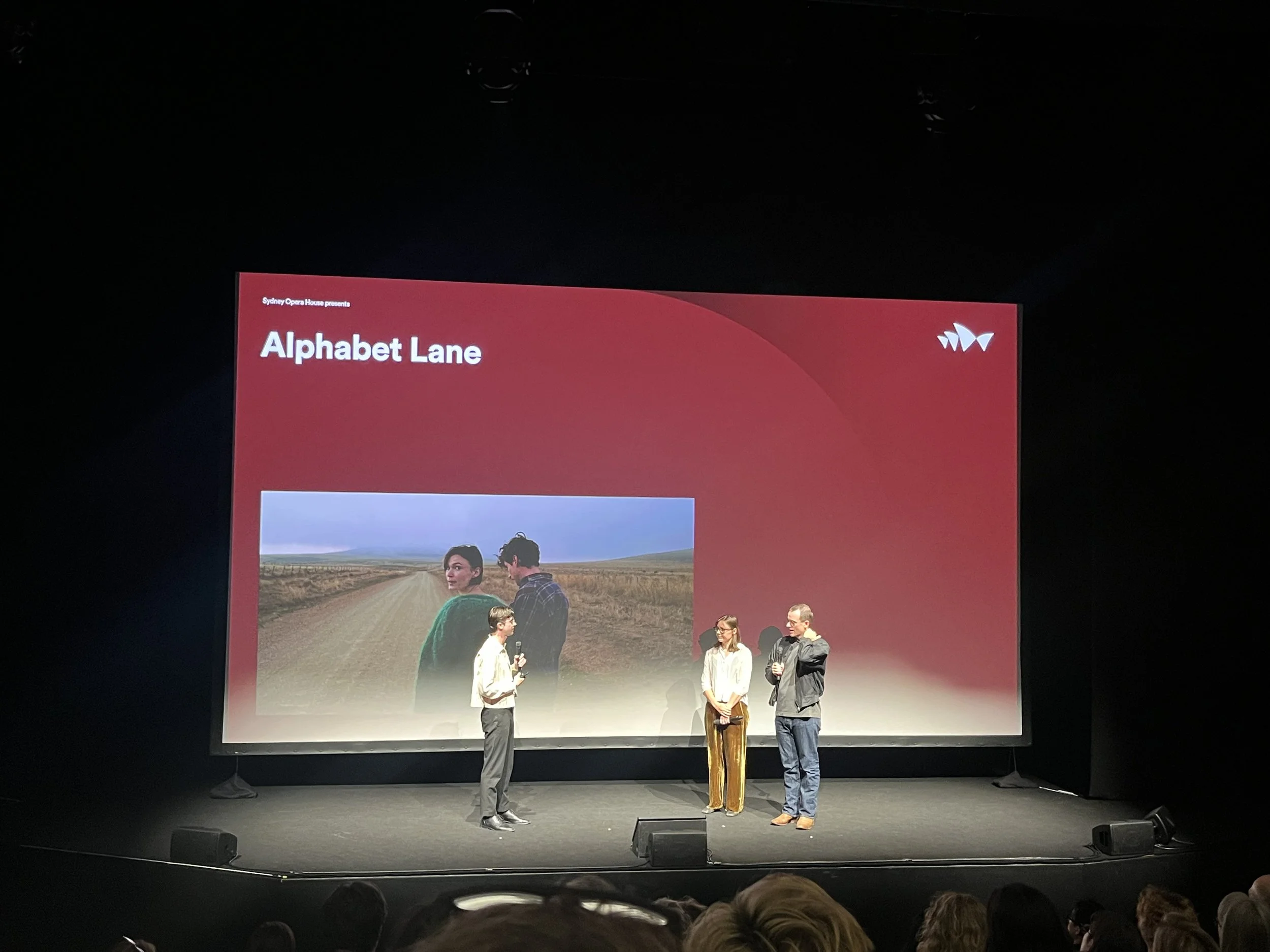
It was the first thirty degree day of spring, and it had come too early in the season. After months of crisp mornings, we bore the uninvited sting of September’s sun. The evening quickly turned opposite as unsympathetic gales forbade Martha and I from walking straight, and spitting rain made my attempts at looking presentable return to their natural wiles. We ran to shelter ourselves in Sydney’s oldest pub. Colonial and strong. Holding up against nature’s unceasing behaviour. Fitting.
In the end it didn’t matter. It only showed us how alive the Australian landscape really is. Condemning and persistent.
As we settled into our seat in the Sydney Opera House to watch Australia’s newest unsettling drama, Alphabet Lane, it all began to feel like an overwhelmingly nationalistic evening. I was seated amongst a ranging group of Inner West faces as we watched the otherness of rural New South Wales become projected as a somewhat liminal space of isolation. Seemingly so foreign from the observing crowd that it could only be dramatised on an Opera House screen. A similar regionality in which I live in and had just commuted from that morning, to review in filmic form within the bustling city centre. An odd paradox that fed my suppressed love for Australia’s “nothing” towns.
The film follows couple Jack (Nicholas Denton) and Anna (Tilda Cobham-Hervey) as they trade life in the Sydney city for a manor in the Monaro region, evolving imaginary jokes serving as a cure to their homesick isolation.
The attachment to our country’s whims and vivacity of its seasonal changes—which I had just experienced in such performance all day—had not quite ended. That evening I watched the Australian landscape cast in Alphabet Lane’s starring role, a role we so commonly trade in film for an international source.
From the repeated ordeal of simply delivering a letter, a benighted knowledge of the fauna that inhabits the couple’s own land, and the flora used as a colour pallet for the synthetic elements to the mise en scene, Alphabet Lane invite something to come from the land’s vacuousness.
The narratives formed by Jack and Anna certainly come across as an impulse encouraged by the isolation these endless fields elicit. Like the starring couple, the audience adopts a sense of listless anticipation as we wait for the action to become real. As we wait for Joe and Michelle to finally arrive, despite being aware of the fact they are mere imaginations of this gothic landscape. It was this growing sense of unknowing, paired with the couple becoming as inhospitable and off-putting as the land on which they exist, that increasingly made viewers second guess what they understood as fiction. Despite this playing into the film’s gothic side, the script and performance of the leading couple included a truly amusing sense of delusion: a comedic undercurrent that was not lost on my attentive crowd.
The house in the film stands as a point of ambiguity between the couple’s waning dependence on city life, unexplored rolling pastures, and perhaps further, uncharted hidden desires towards their partner that haunt the corridors of their mind. A visual of the couple’s mindscape. Rural New South Wales as a foreign space to the crowd of my cinema, as it is to the protagonists, increased the overall sense of discomfort. We watched on as the land sustained its shrouded mysticism despite the couple claiming to have cracked its isolation. Welcoming themselves into a region that continuously rejects their misguided fantasy. Out of touch from a grounded understanding of the land that has existed far beyond them.
While the film’s genre was hard to define – something I talked about with the people seated near me, and something that even director James Litchfield commented on in a Q&A session after the screening – I would argue Alphabet Lane is a modern Australian gothic. Perhaps for the first time, the gothic genre becomes a not so out-of-touch experience for Sydneyites.