
Holy Hell: PULP reviews
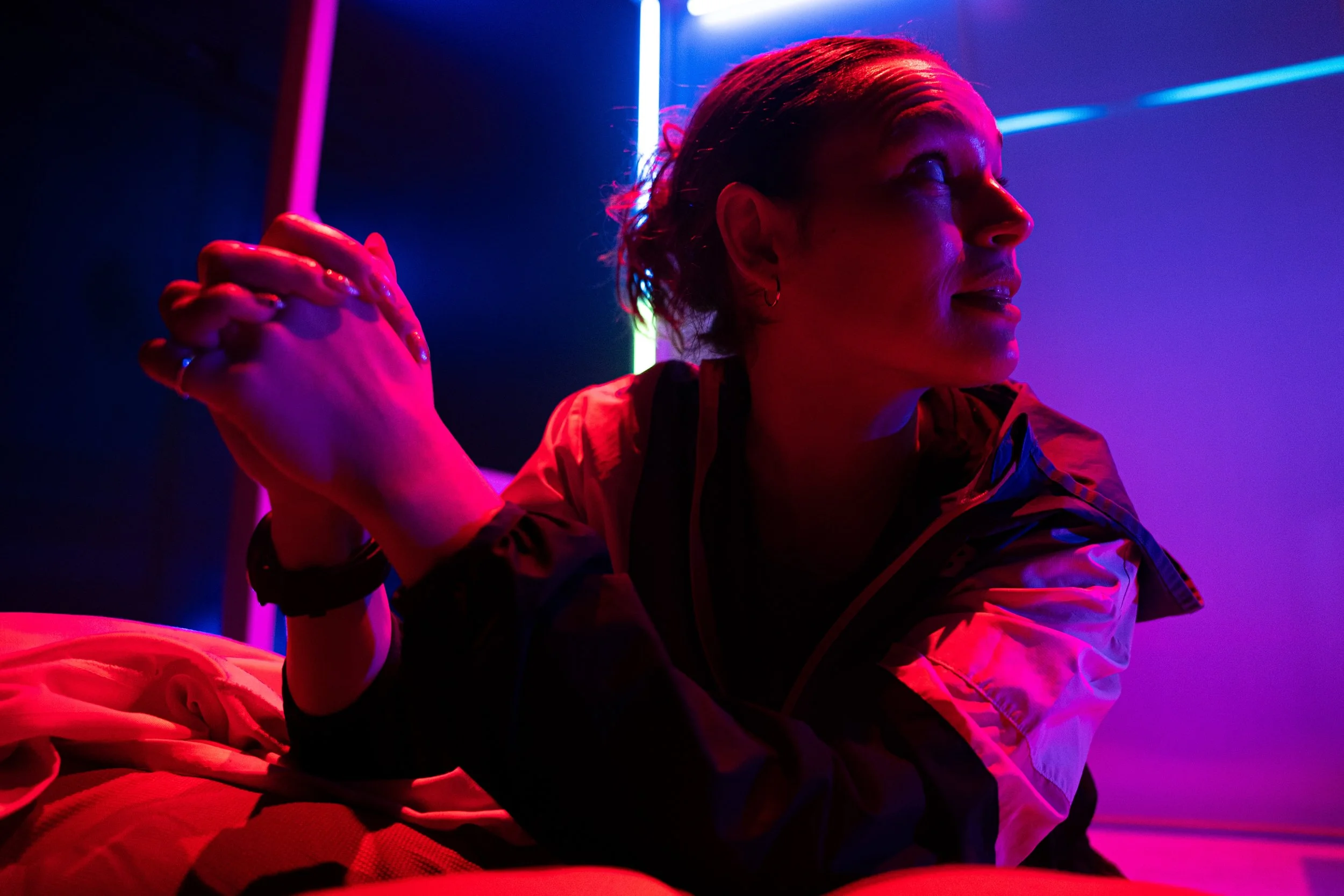
Holy Hell at The Old Fitz Theatre. Photo Credit: Nick Warrand
Would you drop acid at the university chapel?
Bianca Watkins’ Holy Hell imagines just this. Set in an unnamed University of Sydney college in 2016, students Cat and Mish decide to take a trip under the all-seeing eye of The Lord. But following the news that Daisy—their mutual friend and “golden girl” of the college—has dropped out after a wild night ended with her drink being spiked, the friends are caught up in the question of who is ultimately responsible for Daisy’s departure.
At its core, Holy Hell is about moral conflict, the complexities of friendship, and accountability. Setting the show in one of USYD’s colleges grounds its conceptual concerns by providing narrative confines in which the story can take place.
As a non-college dwelling USYD student, the colleges only really exist in my world in three ways: as background scenery to the walk down Western Avenue, a topic of conversation to get USYD students riled up, and in Diana Reid’s 2021 novel Love & Virtue.
Notoriously problematic with their reputation for hazing rituals, sexual assault cases and elitist culture, the colleges are a setting which offers an abundance of material to explore the issues with which Holy Hell is concerned. That said, Watkins’ portrayal of the colleges felt non-specific, although this may have been a decision made to keep the play accessible to wider audiences who don’t have any knowledge of college culture.
Having never attended a show at the Old Fitz Theatre before, I was excited to find that it was one of those small performance spaces which are the backbone of Sydney’s theatre scene for emerging artists. It reminded me of the Belvoir St Theatre’s downstairs performance space; the intimacy and forced closeness of these small theatres offers an immersive experience that makes audience members forget they are watching a play. This worked superbly for Holy Hell: at once the stage became the intimate settings of a messy college dorm, a college chapel and confession booth.
Izzy Morrissey’s lighting design assisted in transitioning the audience between the chapel and the dorm room, as well as demarcating the characters’ altered states of consciousness. Leaning into the hallucinatory effects of LSD, Morrissey used swirling coloured lights that disoriented even the most sober of audience members to indicate a perspective shift into a character’s trip. This was necessary, since the dialogue and movement wasn’t always clear in conveying a change in perspective. Fin Hogan’s sound design coupled perfectly with the lighting design; it provided the emotional bump needed to send us deeper into the world of the Catholic college.
Perhaps the show’s strongest element was its humour. Watkins’ weaved moments of pure hilarity into scenes that are otherwise heavy in subject matter. On several occasions actors had to pause before beginning their next line as the audience rippled with laughter.
That said, the writing and narrative could have been fleshed out to reflect the complexity of the themes which it sought to represent. The heavy focus on the drug use, particularly first time drug use, suggested an over-reliance on relatability and ‘edginess’ for their Gen Z audience. There were opportunities to flesh out the discussion of drink spiking and accountability, but the dramatic action by the end of the show veered unexpectedly into a portrayal of spiritual awakening.
Nonetheless, Holy Hell was an entertaining and thought-provoking show, with the Old Fitz Theatre being the perfect venue for it. I look forward to seeing what future projects Watkins will present.
Holy Hell is playing at The Old Fitz Theatre until 24 July.