
Forked Tongue
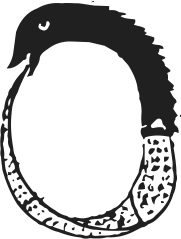
They say snakes are an evolutionary asset to human beings. Developing our skills of perception, sharpening our survival instincts. They say we can sense a snake better than any other creature; enfolded in bushes, sidling against the gutter, slipping through cracks in walls. It is a shadow crawling in our proteins and our DNA. I imagine prehistoric people being swallowed by snakes and swearing they would never make the same mistake again. Thrashing against the tubular walls of their intestines.
Lynne Isbell (2006) called this heightened perception Snake Detection Theory, which I feel is a banal name for something so strange and fundamental to human evolution. How can it be a kind of ‘detection’ when we sometimes don’t even notice the snake’s presence? Tectopulvinar pathways in the body, signals coursing through our nervous system before our brain is even cognisant of the snake. A study by Cody Jensen (2019) shows increased physiological reactions — heart speeding, brain whirring as we scan for a glimpse of the elusive creature. We are fine-tuned machines, pitted against our lapsarian enemy forever.
and when the morning came, it was with a thrill of dread up the spine and the room was domed with thick grey light. the girl awoke with a sense of falling fast, eyes spiralled with dream fog. something warm curled around her neck, squeezing a little, and suddenly everything within her coalesced into a spindly and slippery feeling. mouth metallic with fear.
‘lottie?’
oh, mother. oh bleary-eyed mother stretching her arms around the girl, a subconscious protective stance. tender sunbeams reaching through the bedroom.
the dream came back in flashes, yet it retreated from the surface of her mind the longer she was awake.
hot pit in her ear, only the embers of recognition floating further through the passages of the skull. the thin thing scarfing around her neck. it is smooth, it smoothes. it scorches. its body emanates a coldness, but the burning tongue pierces through all other sensations. yes, it pours and courses along her bloodstream, making a vessel out of her veins.
‘lottie, are you awake?’
It stays with us. An inherited fear sits there in the base of our brains, unmoving for a whole lifetime, it doesn’t feel the need to move or stretch its legs.
Infants are strangely drawn to the coiled animal, whether their attention is born from fear. As if we are prepared to be afraid of snakes, readily accepting them as a threat. Scientists, like Bertels et al (2020) have run various tests on both adults and children, generally concurring that the visual detection of snakes is more effective at instigating a fear response than other stimuli. But why do snakes stand out, so singularly as an evolutionary threat? Other animals camouflage easily into trees and leaves, my friends spend ages directing my line of sight whenever they see an interesting bird; yet I usually cannot spot it.
Perhaps, LoBue and DeLoache (2008) suggest, it is their slithering movement which is unlike any other animal’s natural pattern of motion, or their uniquely narrow shape, a winding stripe of danger. Or maybe it is their ability to coil, another distinctive pattern. We sense something unnatural or unhuman in the snake’s body, foreign to everything a child learns is safe. The wobbling curve of its movement is far from the slowness of human limbs.
‘i’m awake.’
‘aw, baby. another nightmare?’ her mother ran a palm over her hair, clicking her tongue.
‘does it ever stop?’
‘aw, baby.’ looking out the window, creases between the brows.
the girl recalls summers in garden beds, fists full of weeds and grime, her mother rocking on the porch with a silent wail spilling from her purple lips. and a cough turns into a month of sickness, one loss becomes a black chasm barricading you in every direction. the girl remembers seeing a snake twisting through wilting leaves and swallowing down her gasp. she turned to look at her mother and thought about teeth and venom. by the time she had looked at the dirt again, the snake was gone.
now, her mother was rubbing at her eyes, black smudging to the edges of her cheeks. the eyeliner lingered on her fingers, and it looked a little like mud stains.
the girl tried to forget about the dream. but when her mother bent down to press kisses to her earlobe, it stung a little. sharp like a forked tongue.
I’ve wondered whether spirals exist as a mystical or even dangerous symbol because of their likeness to a snake, or if it is vice versa. Lynne Isbell (2006) suggests mythological stories of snakes are another signifier of our evolutionary, inherited fear. The Ouroboros image recurs in cult signatories, an endless circle like a chain; carried through generations and expanding outwards. Medusa and her hair of snakes — fear transformed into something monstrous. Snakes are symbols of duality and punishment in Abrahamic religions. Alternatively, in Native American, Nordic, and Aboriginal and Torres Strait Islander mythology, giant serpents hold the ultimate destructive or creative power over worlds. I personally don’t believe in the story of Adam and Eve, but I would like to. Christianity’s history of humanity spirals from that first fatal encounter with a snake and its beady eyes. The devil.
However, cultures across the world consider some of the most dangerous vipers to possess an incomparable beauty. Landová et al (2018) compared results from a sample of Azerbaijani and Czech students, concluding that groups across political and cultural borders similarly find the most “fear-inducing” species the most aesthetically appealing. Vipers have these mane-like scales that are clearly intimidating, yet this unique feature is undeniably why they are the most revered species. Ultimately, humans are fascinated with things that unnerve and unsettle us. We are nothing if not creatures of habit.
I run my fingers over the slick scales and watch light fling off them; its jewelled skin, tessellating. The snake is mobile in my hand, straining to escape. I have it trapped. It hisses and agitates and braces its head back, as if preparing to bite.
the room had expanded into daylight. she sensed something burning.
her mother was frying eggs, and she was trying to carve the venom from her ear.