
I have never conceptualised hell.
It exists inside sentences and Renaissance paintings; mouths prised open by angels, bodies arranged like furniture with the aesthetic restraint of oil paint. Hell is never within four walls. It has never occupied my mind the way other people claim it does: an atmosphere, a pressure system, an ongoing threat. I have never not done something out of fear of going to hell. Hell has never had jurisdiction over my behaviour. If anything, it arrives as something less divine and more administrative: imposed guilt. Cultural residue. A bureaucratic aftertaste.
For as long as I can remember, I have been incredibly confused about my relationship with ‘God’. Not in the dramatic way that earns a conversion story; no great rupture, no argument won, no rejection performed, just a quiet inability to take it seriously. Like trying to believe in a childhood monster when you can already see the zipper on the costume.
And yet I was baptised, allegedly.
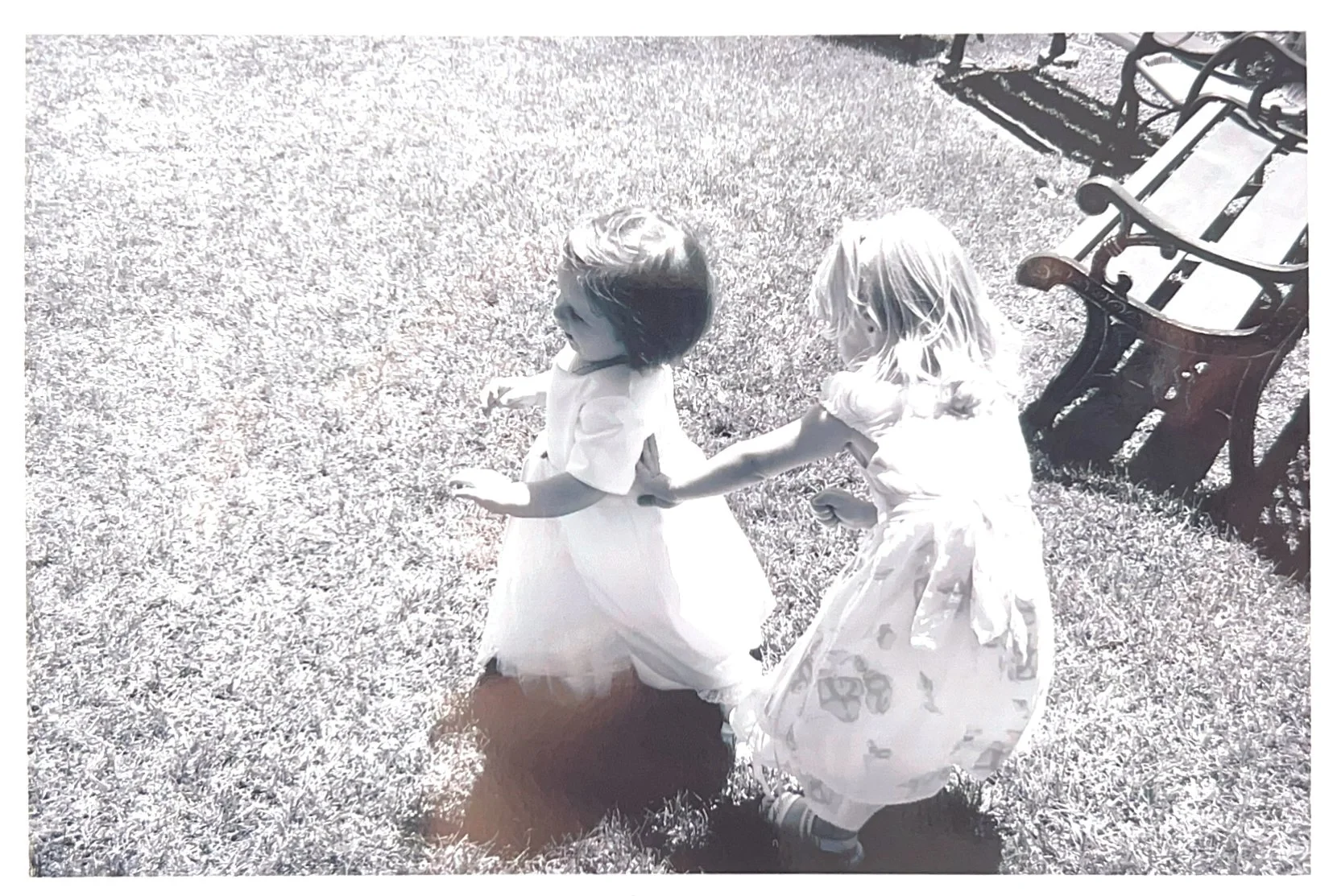
The year is 2005, when I was being baptised I ran out of the church. There are photographs: my body mid-motion, small and determined, my uncle — my godfather — chasing me down the aisle and outside to the garden. The whole thing reads like an omen if you’re the sort of person who believes in omens. Even now, the image makes me laugh. A child trying to outrun initiation, outrun belonging. A child already suspicious of ritual.
My parents believed I never got properly baptised because I was not fully submerged. Something about the priest, something about technique. The logic of it is absurdly tender: if there wasn’t full submersion, the sacrament didn’t “take.” I wasn’t sealed correctly. Not fully washed into the faith. Like they were worried my soul was a surface-level stain.
Water is, of course, the symbol: renewal, rebirth, salvation, repentance. The body made clean. But my relationship with water has never been that gentle. Water is not only blessing. Water is also demand. It fills your mouth. It erases your voice. It teaches you the body has thresholds, and the world will cross them anyway.
It has never been salvation to me—not in the easy, rinsed sense religion promises—but a kind of indifferent theology, endlessly withholding certainty. I have always been frightened of water and drawn toward it with the same animal devotion. The ocean with its uncertainty, its refusal to be known; a pool, sterile and isolating, a clean blue loneliness you can’t bargain with; a bathtub, small as a coffin, domestic and ordinary and still capable of disaster. Once, when my mother was pregnant with me, our bathtub overflowed and the water reached the laundry downstairs, a quiet apocalypse in a house that hadn’t yet met me, as if my arrival was foreshadowed by excess, by flooding, by the body’s inability to contain what it carries. In that house I never used the shower, only that bathtub: ritualised submersion, repetition, a private liturgy performed without belief. Death by Water is not an image I inherited from Eliot so much as a condition I recognise: the ocean’s deep swell is not romantic, it is procedural; an undersea current will pick your bones in whispers with the same calm it gives to gull-cry and profit and loss. The comfort of baptism is that water makes you new, but the older truth is that water doesn’t care whether it renews you or erases you.
Maybe this is the shape of my faith. It’s not that I reject the idea of salvation. I reject the premise that salvation can be performed as a single act, completed, signed off. I reject the idea that you come up from the water as a new person, and stay that way. The body doesn’t work like that. The mind doesn’t. And the shame certainly doesn’t. There is a kind of religion that survives without belief. A religion of reflex. A religion of gestures performed because they are available, because they have been rehearsed into you like choreography. Services are performed with a constrained panache: kneeling, standing, speaking on cue, priests in hauntingly extravagant garb. The body remembers even when the mind refuses. The performance persists, elegant and automatic, the way a trained pianist still plays scales even while dissociating from the room.
I think this is how tradition works too.
T. S. Eliot wrote, in the kind of authoritative voice that makes you feel like you’re being scolded from beyond the grave: “In English writing we seldom speak of tradition, though we occasionally apply its name in deploring its absence.” Tradition becomes a word you can only say when you’re unhappy: too traditional, not traditional enough. A word used as a weapon and a compliment at the same time. But Eliot’s point is sharper than that. It’s not that tradition is optional, or even desirable. It’s that it is inescapable.
“No poet, no artist of any art, has his complete meaning alone… His significance,
his appreciation is the appreciation of his relation to the dead poets and artists.”
The dead.
That sentence reads like theology, like a warning, like a commandment: you are not alone, you have never been alone, your hands are not only your hands. Your words are not only your words. You write with a chorus of ghosts leaning over your shoulder, and what they want is not exactly for you to succeed. They want you to join them. Maybe this says something wider about my relationship with faith. Writing is not something I do, it’s something I am periodically inducted into and something I am periodically expelled from. It has rites. It has offerings. It has a vocabulary of purity and failure. It has an invisible audience that feels godlike in its ability to judge.
And it has hell.
Not the hell of fire and pitchforks and frescoes, but a smaller hell: blankness. Not writing. The inability to make language obey you. The sense that the part of your body that connects you to the world has been removed without anaesthetic. Like waking up and discovering the tendon is gone, and you can still move your fingers, technically, but nothing carries through.
I used to think of writing as a kind of overflow, a surplus of thought that needed somewhere to go. A flooding. But lately it feels like drought. My brain becomes a room with all the windows shut. Even the guilt doesn’t feel productive. I start bargaining with myself like a person trying to negotiate with God despite not believing in Him: If you let me write, I’ll be good. I’ll stop wasting time. I’ll stop wanting to be witnessed so badly.
People often tell me to “write about the guilt,” to write about not being able to write, as if I should become a flesh covered Ouroboros—expected to feed off myself and mistake it for progress. But why would I memorialise it— inscribe it into my body? Will these words, these commands, only serve to contain me?
The sick joke is that I don’t believe in hell, but I do believe in being cut off. I do believe in exile. I do believe in losing access to the thing that makes me feel alive. Maybe this is why baptism fascinates me, not because I want God, but because I want renewal. I want immersion. I want proof that a body can be remade through a ritual act. I want to go under and come up different.
But art doesn’t work like that.
Art is not salvation. It is sacrifice: the ongoing offering of your own interior to something larger than you. It is not water poured over your head. It is the slow tearing away of skin.
Now, in a gesture quite self-indulgent, I shall self-reference: “How do I sever the umbilical thread between creator and creation?” I could frame the problem like a question and make it solve itself. But it doesn’t. As if the cord was simply a cord and not a living attachment, like a vein or a tether. It’s easy to romanticise creation as birth; how gorgeous, how maternal, how miraculous. But birth is not only love. Birth is also blood. It is also splitting. It is also the body being made into a threshold. It is the body as machine, compelled to produce what it cannot keep.
Sometimes I hold a guitar and feel its body as a kind of reliquary: hollow, made to resonate, made to contain sound the way a church contains prayer. The guitar is both an instrument and architecture. It is both object and ritual. You cradle it like a child. It vibrates and sings to you like confession. You tune the strings like penance. You offer your hands to repetition until repetition becomes belief. Piano is different. You press lightly, you breathe into it, and it still answers with violence. A hammer strikes the string to make it speak: a small sanctioned lashing. This is retribution. When the apparatus ages, the strings slacken, thin, and drift out of tune. It insists that: no matter how gently you beg, the end point is not always salvation.
But what happens when the body doesn’t resonate?
What happens when you are not submerged? When the water never fully covers you, when the ritual doesn’t take, when you keep running out of the church before anyone can hold you still?
Maybe writing ruts are a kind of unbaptism. And I still don’t know whether I’m afraid of drowning, or of never going under at all. And tradition—the dead—stand at the edge of the font, watching, as if waiting to see whether you will return to the water willingly this time.