
The Sneaker Loafer Arms Race
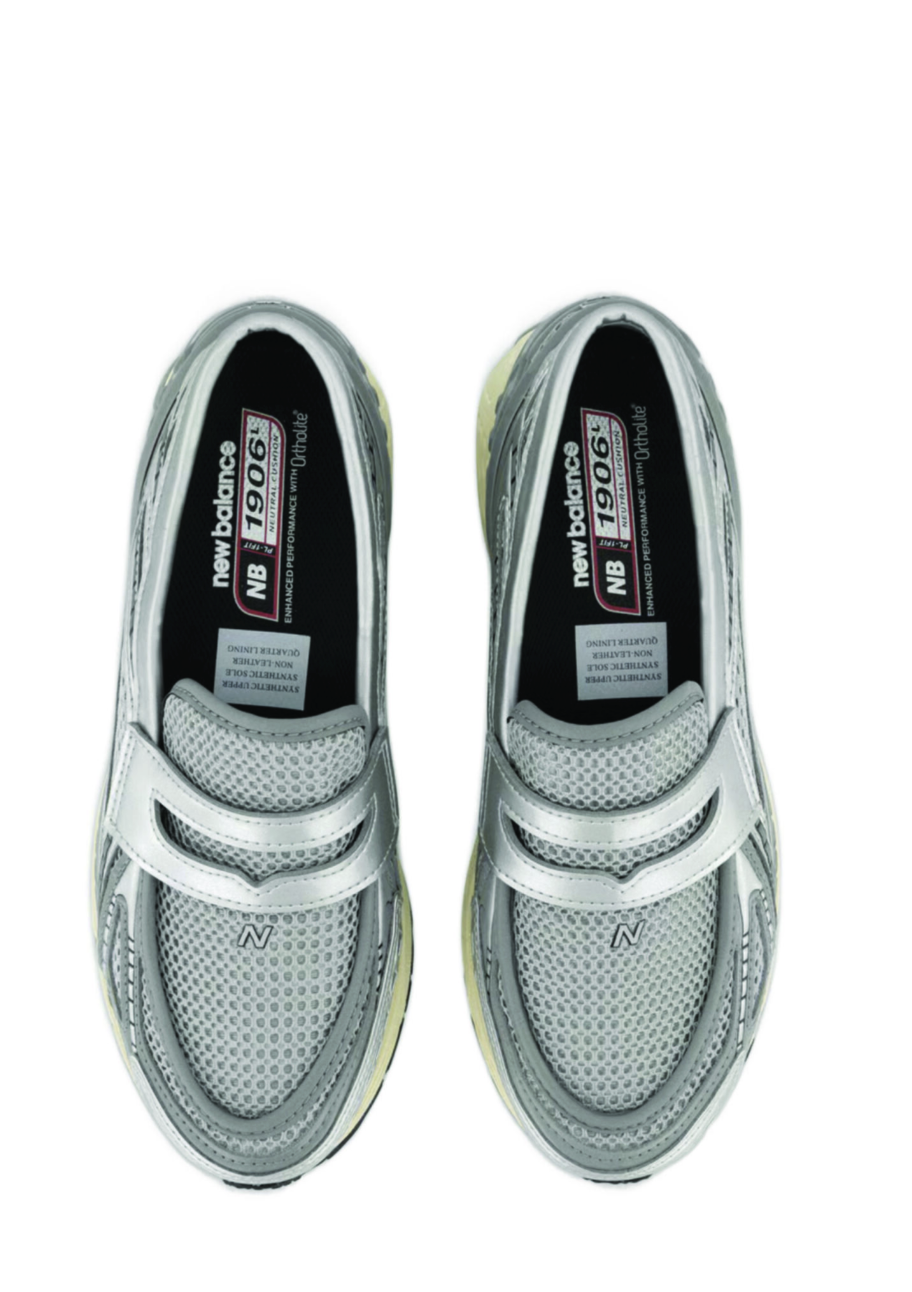
Sneaker loafers are a highly confusing shoe.
They offer the materials and (presumed) comfort of a sneaker, with a Frankenstein-ed idea of a loafer wedged in there too. The ease of styling sneakers but with a loafer silhouette to feign formal footwear. This shoe is the ultimate sartorial confusion. It is marketed as a fashion forward sneaker, capitalising on the increase of loafer and formalwear popularity to provide the ultimate win-win: you get to look like you’re wearing funky creative sneaker loafer hybrid shoes, and you don’t have to go through the month of hell that is breaking in loafers. But that’s just what the ads tell you. We come to PULP to read what I have to tell you. And I will tell you this: I have questions.
What are these shoes? Why are they so popular with so many different people? Will they last or be banished to the archives waiting to be picked apart in a journal article in like 40 years or so? Sneaker loafers vex me. I don’t know who they’re for. I know I don’t like them, but should we respect them regardless of personal taste? Thorstein Veblen is spinning in his grave over the sneaker loafer, and to be honest, I’m spinning now and I’m not even dead yet.
The history of the sneaker loafer dates back a lot further than you think, if you choose to trust unreliable sources. Some guy with a wordpress (for his “psychological overflow”) said that in as early as 1982 Nike released the Vagabond. It looked interesting. Just imagine a sneaker loafer with a sneaker part that screams nurse shoe, and a loafer part that is… divorced dad from Maine in 1982. Wordpress guy was backed up by a singular tweet from user @NiceKicks of which I can assure you the Nike Vagabonds are not, and apart from those two, there is no other proof that the Nike Vagabond actually was the first sneaker loafer in existence. So I will call it a pure outlier, and a fun tangent. If anyone is able to style those in the year of our Lord 2026, I commend them. That is of course, if they were a real shoe at all.
The known history of the sneaker loafer began rather recently. Like Miranda Priestly heralded, any great moment in fashion starts at the top, on the runway (then it filtered down through the Incus and then trickled on down into some tragic HYPE DC where you, no doubt, fished it out of some Afterpay Sales Week clearance bin). In the Junya Watanabe MAN Fall 2024 menswear show, look 34 was the first glimpse humanity caught of the sneaker loafer. Styled in a patchwork grey-black suit complete with tails and a pair of black sweatpants pulled up at the ankles, a spiky haired twink modelled what was going to prove the most divisive yet popular shoe of the show. The Junya Watanabe x New Balance 1906L alongside the later released all silver New Balance 1906L in 2024 marked the beginning of a new sneaker age.
The Sneaker Loafer Arms Race began the second that lanky spiky haired twink walked anemically down the industrial warehouse that was the Junya Watanabe MAN Fall 2024 show. I just know it was a state of sartorial emergency in the sneaker companies. Except for maybe the Vibram FiveFingers people. They live on their own planet. Mizuno released the Wave Prophecy Moc in the end of 2024, and in 2025, the floodgates opened. Hoka Speed Loafers came out in January, Nike’s long awaited Air Max Phenomena came out in July, and quickly after its fashion week and subsequent instant sell out success, countless brands hopped on the New Balance 1906L hype. Ganni, Junya Watanabe MAN (again), and Jaden Smith all had their spin on the 1906L silhouette to varying success. Sadly, that gave Jaden Smith ideas to keep exploring his passion for footwear and just look at Christian Loubiton now.
The Sneaker Loafer Arms Race continues (at time of writing, but I do note the ballet sneaker is catching up) and I have no doubt that we will be seeing more sneaker loafers from other powerhouse brands. Adidas, Puma, and Asics have been remarkably silent, and I commend them for that. There is something to be said for not mindlessly shuffling between trends at every possible chance. While each brand has fallen victim to trend chasing (I’m looking at you Adidas Stan Smith Ballet, Puma Wedge, and the absolutely horrendous $400 Asics Gel Kinetic SP), I commend them for, just once in their existence, not flocking to the sneaker loafer like flies to a weird lamp.
However, shuffling to the sneaker loafer trend in particular is proving to be a highly effective cash grab for brands. New Balance, as the founder and kingpin of the Sneaker Loafer craze, grew their profits by 19% between 2024 and 2025. This was the highest growth in profit for any major footwear brand, in a time where the industry as a whole stagnated. Though New Balance can’t attribute a 19% growth in profit solely to a single shoe, I would argue a combination of the 1906L’s insane virality alongside a year’s long effort to carve out a more creative place for the brand rehabilitated its former 2010s image as a Dad Shoe Brand to a 2020s creative, fun, yet still co-worker friendly shoe. But regardless of all that, the sneaker loafer for all of its commercial success and worship, is just a fundamentally ugly shoe.
Look. In my opinion, it’s daggy. It’s not an effective hybrid. The sleek lines and material elegance of a loafer are destroyed by the chunky sneaker-iness. Likewise, the creativity and cohesion of a sneaker is destroyed by conforming so heavily to the loafer silhouette. It’s nice that it’s a successful hybrid — I can successfully figure out what it’s trying to do, but in the end, if it looks awful, what is the point? Sure one can create a hybrid shoe of a thong and an UGG boot, or a brogue PUMA Speedcat wedge or any number of things, but should one do such a thing? Even if it stands as a successful hybrid, it’s still ugly.
It sticks out like a sore thumb, and not in a good way. It’s a shoe only complimented for its shock value because it doesn’t look good on its own. It’s not exciting visually. It combines two opposing things and our brains find that funny or interesting or compelling. And it seems that this understanding of style has existed for a while, something that DOAT (diva of all time) Thorstein Veblen had something to say a lot about. Veblen argued two things that I think help us understand the sneaker loafer better. First, that in most people, fashion is about conforming to how we understand taste and how our community wears certain garments. I know all you contrarians are about to burn me at the stake arguing that wearing your TNs, selvedge denim, and Vivienne Westwood together is a subversive hit no one but you could’ve made, but I hate to tell you: there is no such thing as an individual style. Everything we wear is just a combination of ideas we’ve seen elsewhere (see: Hans Eijkelboom). But that’s okay!
Everyone’s combination of fashion ideas ends up being different and that is where personal style exists, but to say that the vast majority of people have an entirely unique personal style and don’t conform to communal tastes and trends would be categorically insane. The sneaker loafer exists in part because of this idea. The way the sneaker loafer was styled was something a lot of people got behind, and so more people wore it, and so it got more viral, so there were new ways of wearing it, so more people wore it. And on and on and on. Fashion exists because multiple people agree on it, and then enshrine different ideas of wearing it, which communities of people end up adopting. But why do we choose items like a sneaker loafer that is wildly impractical, and all in all, a little wacky? Veblen says that in the modern era, fashionable dress for the gentry (it was 1920 give him a rest) needs to be expensive and signify that the wearer “is not engaged in any kind of productive labour.”
Although this idea has dated, I think that there is a certain element of class analysis that one could conduct on the sneaker loafer. The shoe isn’t for anything more than walking around cities or maybe a light hike if you’re feeling adventurous. It’s a shoe that arguably signifies a bit of a sedentary lifestyle if I’m being totally honest. Veblen argues that fashion exists to show society who you are and what you do. What the sneaker loafer is showing society is that you are a male manipulator and what you do is DJ poorly at the Abercrombie.
But in the same breath, I know a lot of people adore the sneaker loafer. Its wide demographic success is honestly uncanny. Gym bros, performative men, performative lesbians, swagged out old heads, and people who hate formal shoes but have to go to a wedding all love the sneaker loafer. And while I personally find its existence abhorrent, unfortunately I can’t bring myself to hate them.
In a world of re-releases, archive pulls, collaborations, and beating a dead sneaker with new colourways until it’s even deader, the 1906L was the first truly new sneaker we’d seen in a long time. It was a silhouette that had not ever been done before. When nearly everything has been explored in the sneaker, to the point that most of GQ’s writers were declaring the whole shoe genre dead, seeing an entirely new shoe injected some much needed life and innovation to the field (if you can call sneakermaking a field). In a time where people are creating AI slop dresses and having the audacity to call it couture, or referencing past fashion innovation to the point where nothing new is made at all (see: Louis Vuitton menswear), there is a need to at the very least respect any creation of something sartorially unique. When the content we doomscroll, the entertainment we unwind with, and the information we use to posture with is all being decided by algorithms made by actual insane people or slowly being infected by AI nonsense made by other insane people, the clothes we wear each day are maybe the last thing we have that we decide for ourselves. Dressing ourselves everyday is a decision about who we are and what we want other people to see about us. So while I find the sneaker loafer not that visually amazing to look at, I cannot discount the fact that they are a truly new design. I’m sorry everyone. I’m just… not a true hater.
On April 25, 2024, in the lead up to the 1906L’s release, New Balance designer, and the creator of the sneaker loafer, Charlotte Lee posted a photo dump of the 1906L launch event and her process of designing the shoe with the caption,
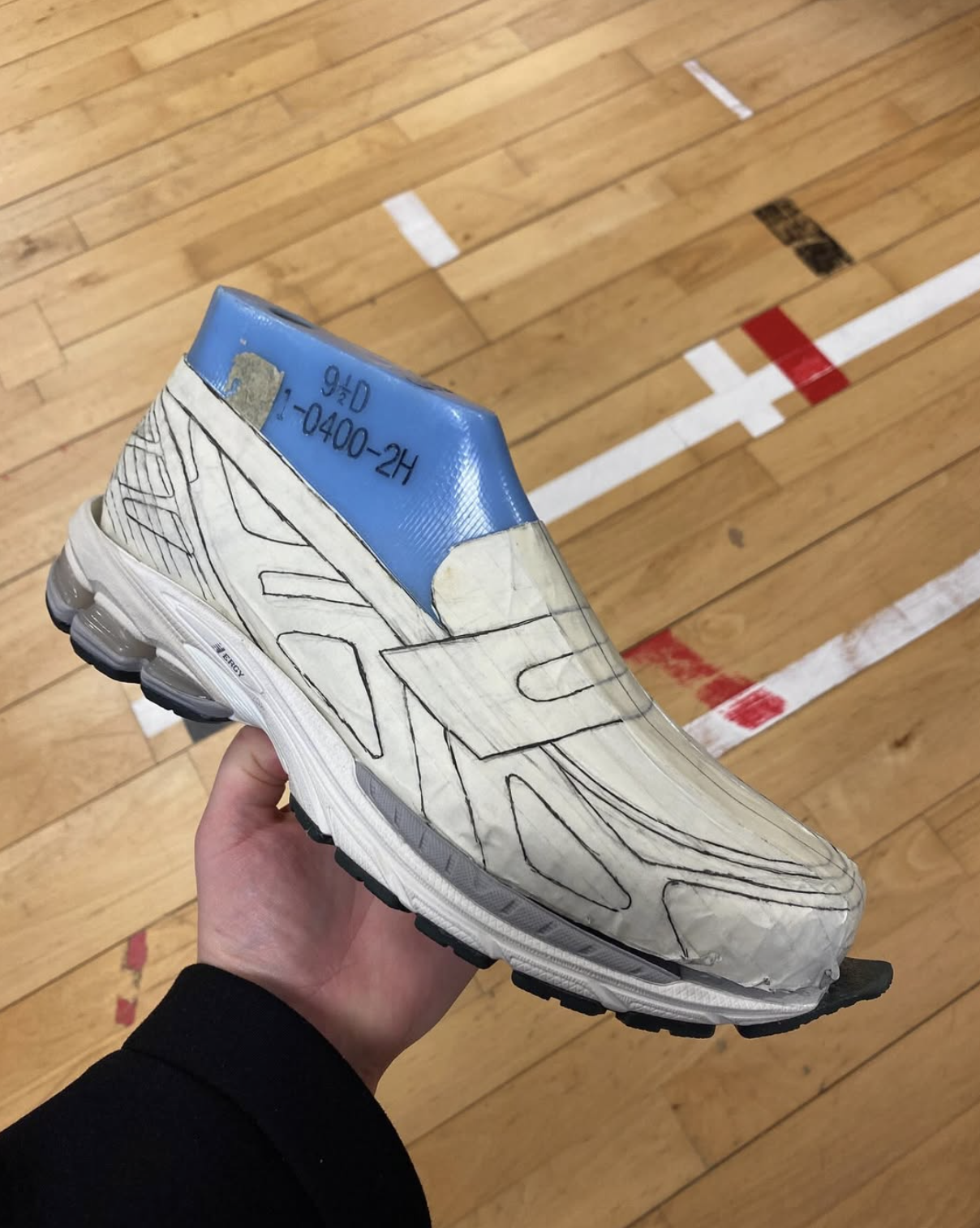
“A wild concept idea that came to reality, the 1906 Loafer, my proudest moment so far.
Special thanks to all the believers at NB.”
Charlotte Lee did something that not a lot of people can say they have done. She made an entirely new shoe. And that truly takes guts. I commend her for it. I sit behind my laptop thinking about the sneaker loafer, discussing it with my coworkers, laughing at its existence, but she and many others actually made it exist. However, sneaker loafers will continue to be the bane of my existence.
Sneaker loafers will continue to be an eyesore, a sartorial confusion, a slightly wankery shoe, a cash grab, a polarising topic for @artifaxing or @hidden.ny instagram comments sections to bicker about, and will continue to probably be worn by a small cross section of nearly every kind of person. But I wouldn’t wish for the sneaker loafer arms race to end just cause I hate the shoe. It’s something new that at least in its concept isn’t actively harming anyone (there is still so much to be said for the labour conditions in the footwear industry alongside the environmental impacts of the fashion industry globally and especially in peripheral countries). But as an idea of a shoe, the sneaker loafer, as far as I’m aware of, isn’t doing much harm. We can’t say that about all of the new things we have. Most new things are awful. This new thing is just visually awful. We can live with that. It’s a creative piece of design in a world of recreation, or worse, artificial generation. So. Let them wear awful shoes I guess!