
Night at the White Bay Power Station: Sydney Biennale’s Art After Dark
The March residue of summer, where muggy nights and mosquitoes keep you awake, had vanished overnight. What was left was a howling southerly that pushed cold air and bouts of rain through the streets. It turns out that this weather was perfect for the haunting melodies and evocative art pieces I was about to witness at White Bay Power Station for Sydney Biennale’s Art After Dark.
Portia, Jess, and I took the 433 to the venue, arriving in the nick of time for Marcus Whale’s performance. We weaved through various art installations that we promised to return to. We entered the main space which included a stage in the centre, a bar round the side, and various art installations around the edges of the space. White sails created a backdrop behind the stage and impressive decks sat on a table in front.
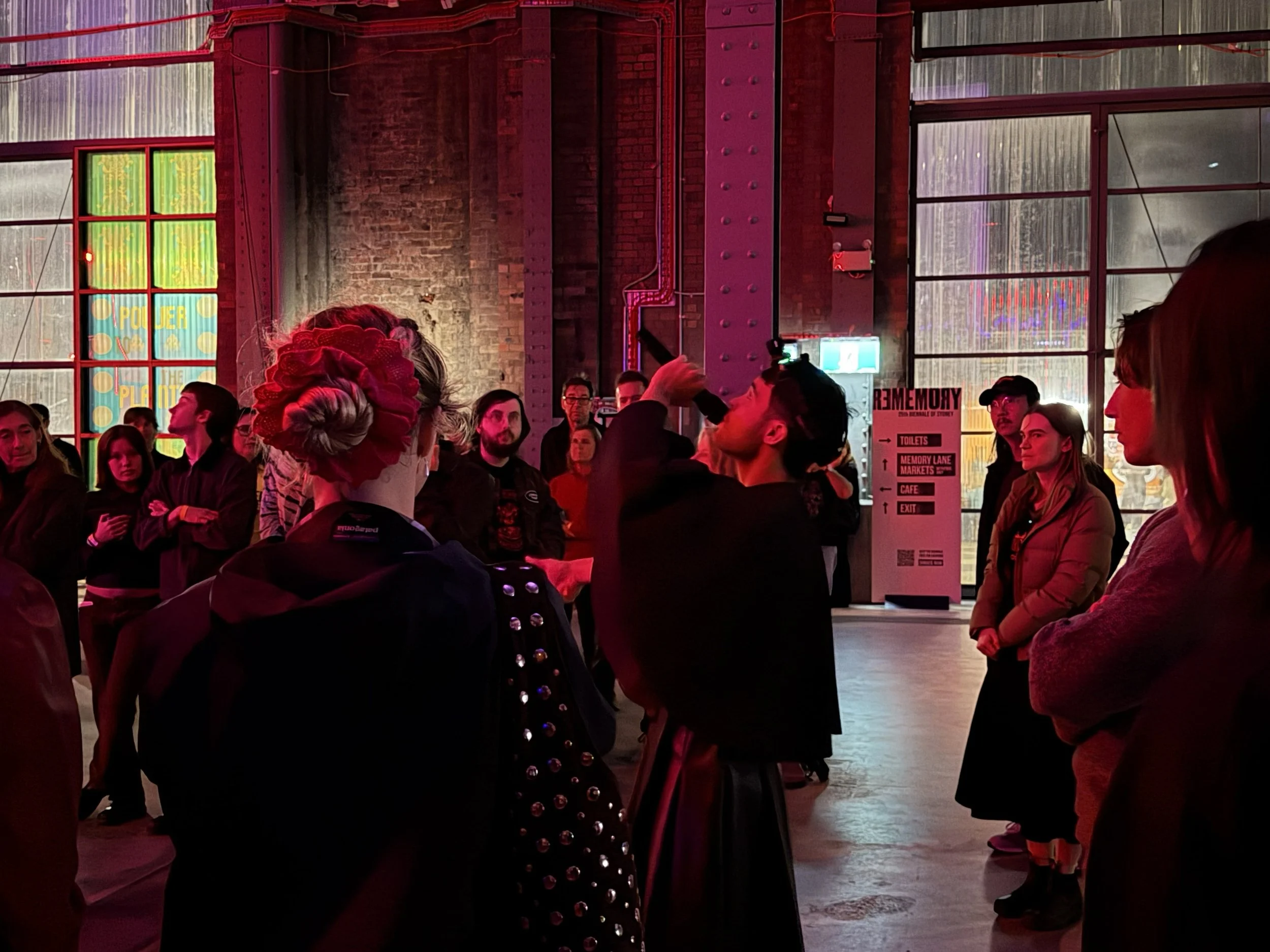
Marcus Whale, White Bay Power Station, 2026.
However, Marcus Whale did not perform from the stage, instead drifting in and out of the audience. For those of you who have not had the pleasure of witnessing Marcus Whale perform live, the multidisciplinary artist sings, dances, and writes about the divine, desire, and the duality of horror and pleasure derived from these experiences. He moved through the crowd like water—slowly, softly, but with great impact. His melodies washed over the audience as he spun with his head torch, illuminating the audience in waves. Holding the microphone in his mouth, his A-line leather skirt flared as he twirled and twirled. Marcus Whale’s incredible breath control and ability to engage with the audience was impressive to watch.
After the performance, Jungist, an Eora-based DJ known for her experimental music, features on FBI Radio and co-founding of Decay Audio, performed, complementing the atmosphere of the White Bay Power station. Jungist also created a smooth transition between Marcus Whale and Ruhail Qaiser’s performances whilst people took the time to wander through the art installations and take them in. It was great to see collaboration between Liquid Architecture and the Sydney Biennale and for the set to include prominent Eora-based artists and contributors to FBI Radio.
A highlight of the night was the interactive art exhibit by Vietnamese artist Tuan Mami titled Seeding The Future No. 3 (2026). Seeds of various Vietnamese plants were donated to the artist by the Vietnamese community in Sydney so that visitors to the Biennale could roll individual seeds in clay to create little balls. We placed them in the middle of the table with hundreds of other little seed balls. I think this installation encapsulated the Biennale’s theme of “Rememory” beautifully as it examined the impact of human movement and activity on history and nature, reminding us of cyclical chronologies of birth, death, and growth.
Marianne Keating’s video installation titled An Ciúnas / The Silence (2023) in the upper level of the power station also stood out as it explored the parallels between Ireland and Jamaica in their struggle for independence, and the migration out of Ireland to both Jamaica and Britain. The considerable crowd gathered around this installation demonstrated its popularity. I was drawn to the montages of luscious, tropical greenery, closeups of vinyls spinning on old decks, and the conversations between Jamaican residents and the artist.
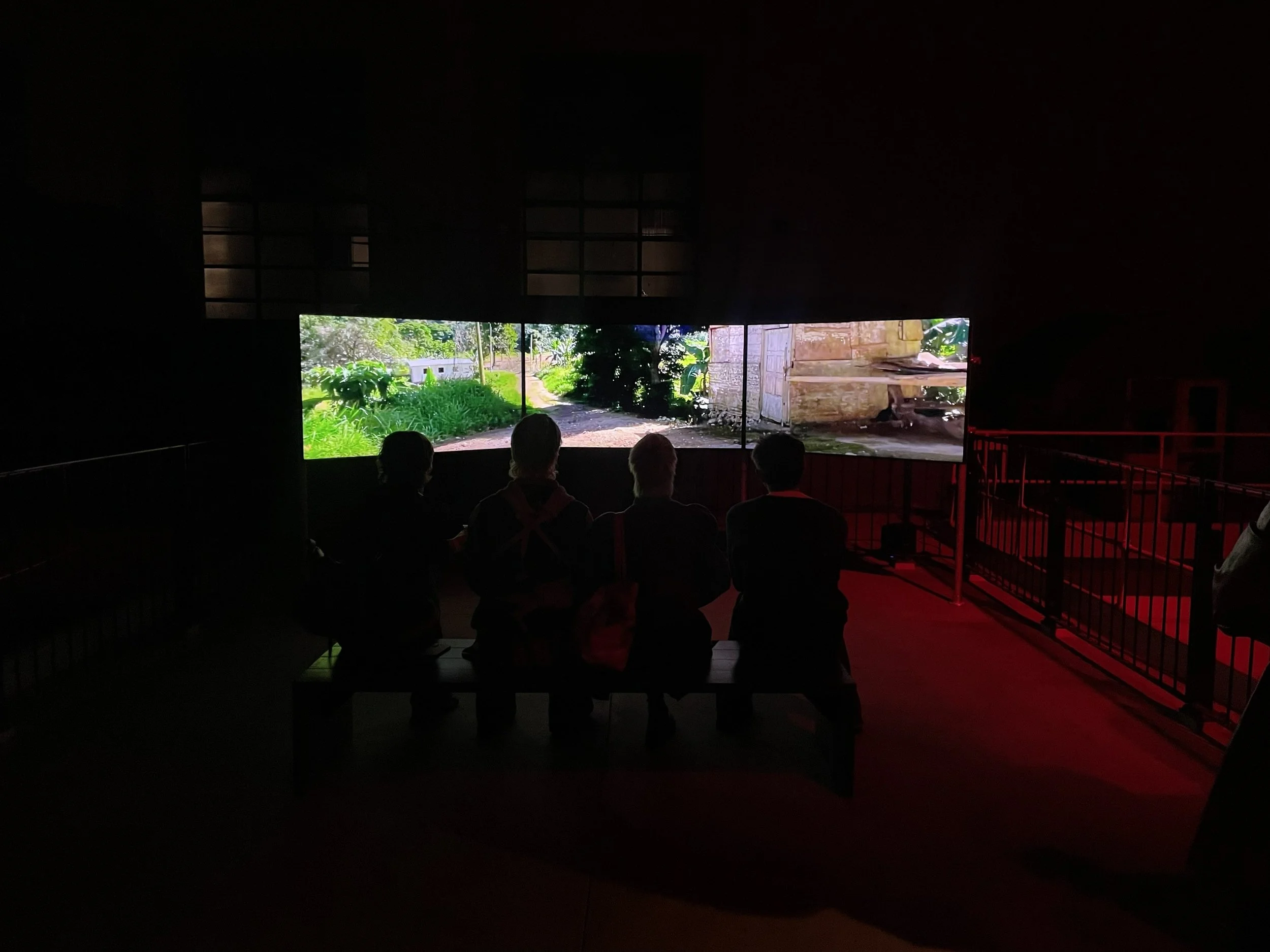
Marianne Keating, An Ciúnas / The Silence, 2023.
As we wandered further, I noticed that many of the works were video installations that discussed heavy themes of child slavery, genocide, and loss. Sydney Biennale always does an incredible job of highlighting a diverse range of artists and important themes, however the decreased variety of artistic mediums in comparison to the 2024 Biennale “Ten Thousand Suns” meant that I became slightly weary and less engaged with the themes conveyed in the artworks. Additionally, the heavy machinery and brutal infrastructure of the White Bay Power Station were difficult for the video installations to compete with. The larger installations like Carmen Glynn-Braun’s To hold the line of ‘Ware’ (fire) (2026) and Nikeesha Breeze’s Living Histories engaged visitors more effectively and simultaneously challenged the intensity of the power station.
We made our way back to the main space to witness Ruhail Qaiser perform his haunting “sonic palate-cleansers”. His experimental techniques of moving a small wired microphone around his mouth and looping the sounds into his compositions reverberated through the turbine hall. The heavy base and his haunting shrieks conversed not only with the darker side of the Biennale’s theme “Rememory”, but also matched the chilling weather that had blown over on Friday. Ruhail Qaiser’s performance was incredible, but also shattering. He moaned and shrieked, blending his voice with synths that were as jarring as they were encapsulating.
The artworks and performances at Sydney Biennale’s Art After Dark were evocative and experimental. I particularly enjoyed the hands-on activities, the larger installations, and Marcus Whale’s performance.
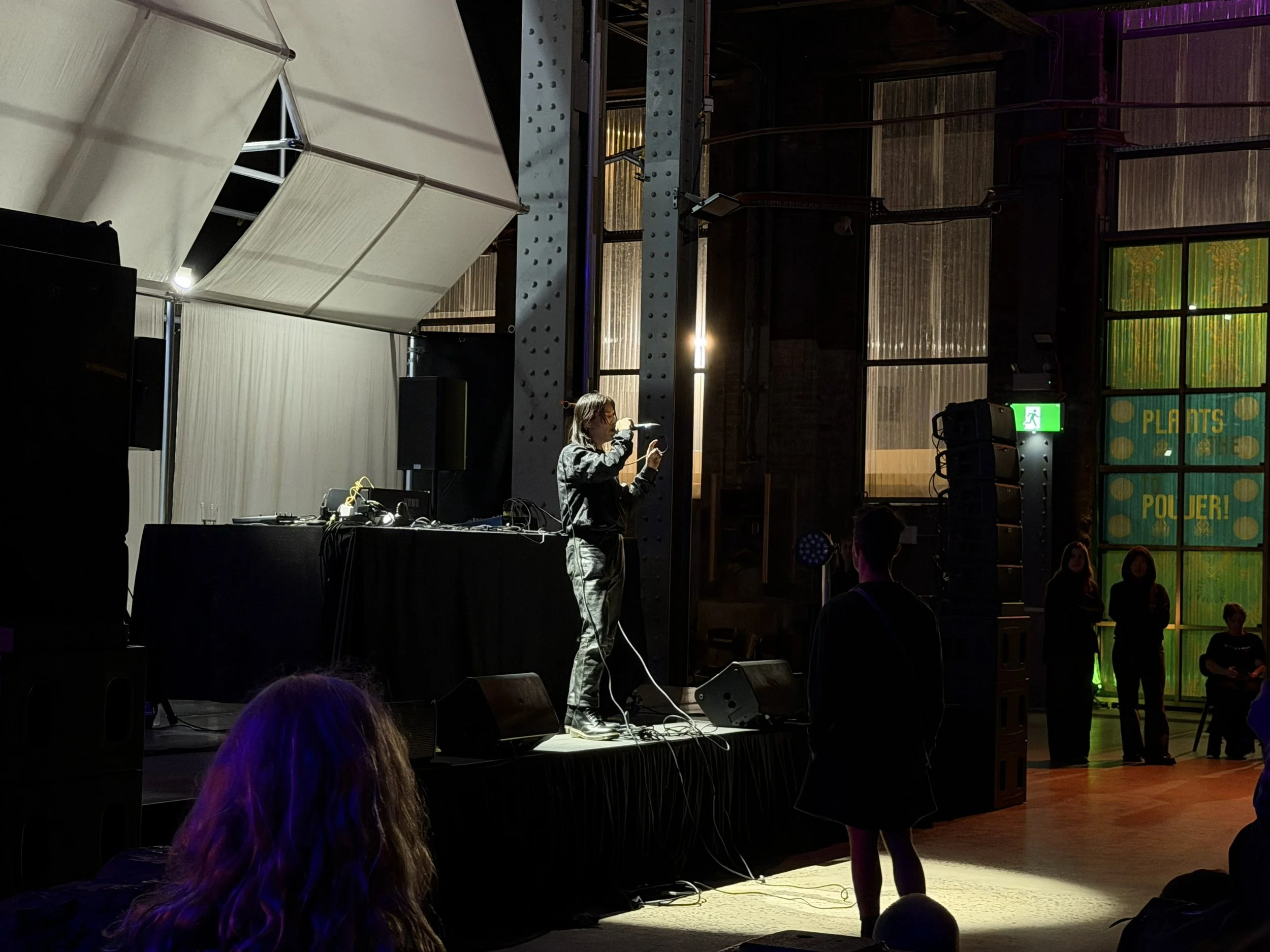
Ruhail Qaiser, White Bay Power Station, 2026.