
Laneway 2026 in the Sun, Rain, and Everything in Between
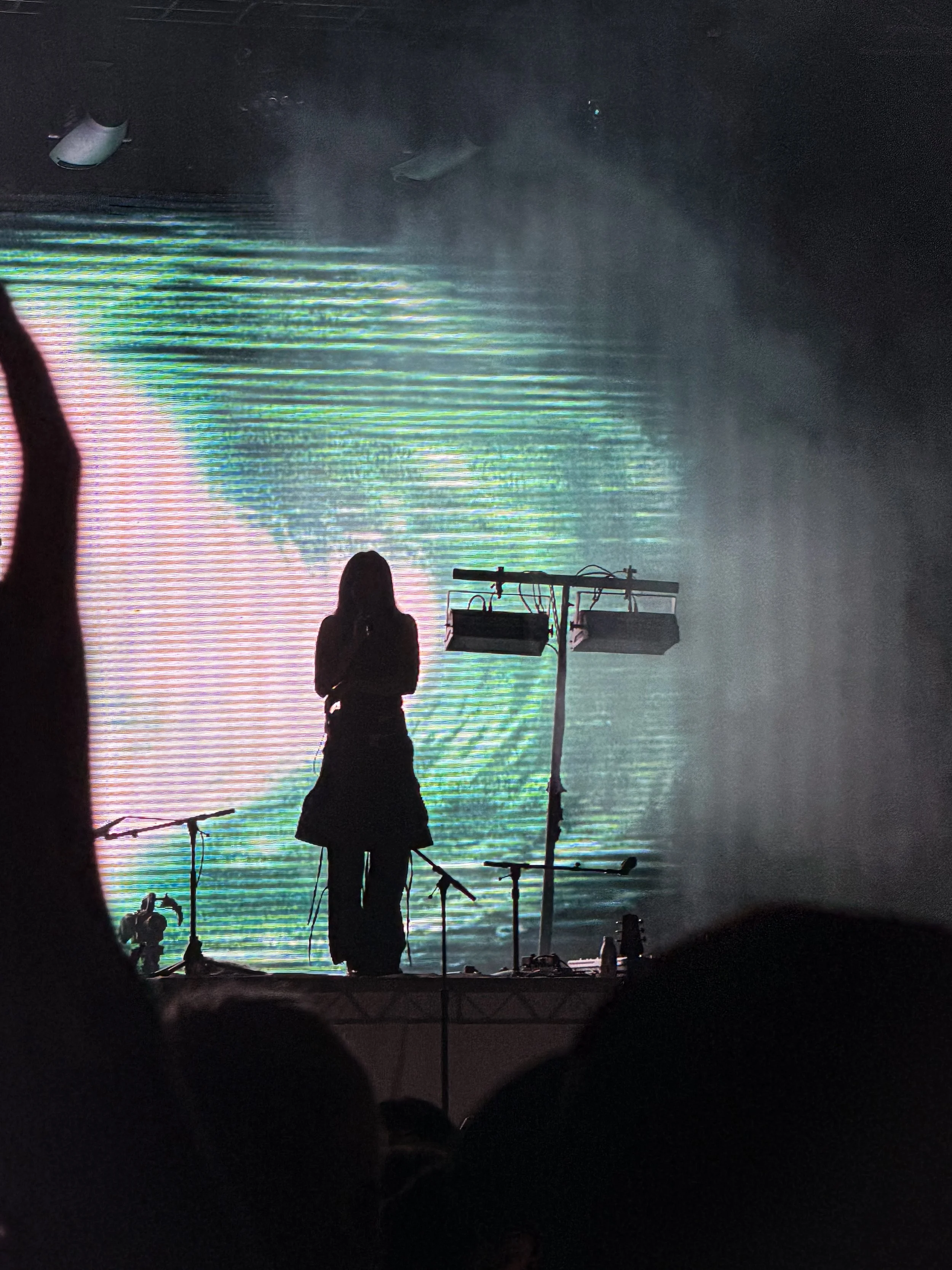
Walking to Laneway from the Moore Park light rail stop, a light drizzle had left the ground spongy and people's well-chosen gum boots or unfortunate low-topped Speedcrosses sunk into the mud. The sprinkling of water sent outfits into disarray, leaving hair a little more frazzled, makeup a little less blended, and everyone a little more ready to throw themselves around a dance floor. After Charli XCX headlined last year alongside featured artists like Olivia Dean and Clairo, Laneway 2026 had a lot to live up to. Before I arrived, I had already heard a lot of my friends say that the lineup this year couldn’t compare. Perhaps this was because last year's festival revolved around Charli XCX which reflected a recent trend of festivals relying on a single act to sell tickets. Laneway 2026 felt like a refreshing break from this pattern. Walking in, the air was charged with excitement and the headliner, Chappel Roan, was not the only name on the lips of festival-goers. Everyone seemed to be excited for a different act—Geese, Wet Leg, Role Model, Lucy Dacus—the anticipation of the crowd was not reserved exclusively for one act but rather poured out in every direction.
This diversity of performances was one of the major strengths of the event. Fans of indie rock band Wet Leg danced to the bedroom pop of Role Model and mingled with the EDM lovers of The Dare. Wolf Alice was the band that I had personally been most excited to see. Mentioning that I was a fan of their music in conversation with someone after the festival, they said “Oh, Wolf Alice is still around?” with unaffected surprise. The comment actually spoke to the quality of Laneway 2026. Today, a lot of musicians blow up at a calamitous pace through TikTok trends and internet stardom; performers like Pink Pantheress have only really hit the mainstream in the last couple of years. Laneway’s smart inclusion of seasoned artists like Wolf Alice brought range and experience to the stage. Their success demonstrates that the community of music and festival lovers value music that can endure; that a slower pace of creation can still be a viable pathway for artists. There is a special place in my heart for artists who release albums with a significant break in between, each song very intentionally crafted and the anticipation of the audience building over time. Laneway 2026 struck an impressive balance of buzzing new hit artists and familiar, beloved festival regulars.
As my friend Portia and I neared the entrance in the middle of Centennial Park on Sunday, we surveyed the lines of chattering people, grabbed a handy pair of earplugs and wondered whether we were about to run into everyone who we have ever loved, hated, made eye contact with at an arts lecture, or chatted to at Flodge on a random Monday night. Getting in was streamlined, and security refreshingly light. The longest line was for the portaloos, a classic festival infrastructure shortage which became even more strained inside the venue. We were fast-tracked, though, by our willingness to brave the lack of toilet paper and then entertained by the people in front of us. The pair was decked out in pink, sequins and Chappel Roan caps—which turned out to be the staple merch of the day. “We thought there’d be more sequins!” they exclaimed to us. The crowd appeared well dressed and under-exaggerated; there were a lot of off-the-shoulder tops, thick belts, tiny shorts and simple singlets. Considering the number of alt, indie and rock options, the jorts scarcity and under-16s wristband abundance surprised me and spoke to the range of people Laneway attracts.
The day began with more of the local Australian acts, including Blusher, Djanaba and Teen Jesus and the Jean Teasers. In a country where we often look to the international music scene as a greener pasture and lament an Aussie music scene which we judge to be weaker, the presence of these artists and the number of people who came early to watch them was heartening. It would have been nice for some of these artists to take later spots in the day, so people like myself, who prefer to arrive later, could enjoy and potentially be introduced to new artists within our local music scene. When we buy tickets to a concert, we often stick to a single genre, the artist we are guaranteed to enjoy. Hailing back to the strength of a festival breaking niche identity moulds we have created for ourselves and connecting us to a wider scene, I feel as if we should seize the opportunity to increase our engagement with Australian acts.
Oklou’s performance in the midst of the day was a standout. Arriving at the “Everything Ecstatic” tent, and expecting it to be packed like sardines (as it would be for the later acts), we were surprised to see groups sitting in circles in the shade of the tent towards the back. Keen Oklou fans only really took up the front third of the tent, dispersing out into a more mellow crowd until about the halfway point. Oklou had to work hard to overcome Sydney’s performative insouciance, evident as many of the people we were surrounded by struggled to commit to boogieing to music they weren’t familiar with. However, this was only a minor stumbling block in an incredible performance that would soon have even the most lackluster Oakley-wearing guy moving his feet. The blue canopy of the “Everything Ecstatic” tent paired beautifully with Oklou’s hypnotic vocals, allowing webs of light to splinter through the crowd and soon both hearts and bodies were captured. The electric beat and dreamy voice had everyone staring at the stage in wonder. When ‘Blade Bird’ and ‘Harvest Sky’ were played, everyone danced more easily to the familiar tune and it was clear that we were watching a star. Oklou’s performance felt like one that may bolster Laneway's reputation as a festival that predicts artists on the cusp of mainstream fame.
Later in the afternoon, Lucy Dacus' set was perfectly timed; a cocoon of sound that let us settle on the grass, catch our breath, and let it wash over us. The crowd swayed, reliving their nostalgia, love, and loss. Dacus’ hits, including ‘Night Shift’ and ‘True Blue’, were sprinkled amongst songs from her 2025 album Forever is a Feeling, including ‘Hot & Heavy’ and ‘Ankles’. Hearts were split open and left on the grassy lawn before the stage. The sun had come out and soaked into everyone’s skin, and we left feeling rejuvenated, ready to throw ourselves into the set of The Dare.
Like all festivals, the set times of artists playing back-to-back left little time to rush from one stage to another. Like magpies chasing shiny objects, we rushed from one stage to another and missed out on a more immersive experience, something which I would advise against for future festival-goers. Deep in the crowd for the set of The Dare, but in line with the exit, we were in the midst of the kerfuffle of movement between artists. It was difficult to feel fully immersed when every couple of minutes a group of people would shuffle out, sweaty arms rubbing against ours and muttering apologies. But despite being in the washing machine of the dance floor, we had an amazing time at The Dare’s set. The electronic beat and experimental sound coaxed people out of their shells and unleashed the energy of the crowd throughout the entire tent. ‘Girls’ played to a chaotic audience who somehow belted every word to the hit song, in between struggling breaths and waving limbs.
Around this time in the day, the clashing set times of major artists hit a crunch point with The Dare playing right before Geese, who performed at the far ‘Hope Springs’ stage, and whose set overlapped with Role Model and Pink Pantheress. While clashes are inevitable with a lineup as star-stacked as Laneway 2026, the significant overlap in fanbase between artists like Pink Pantheress and Geese made the clash a source of woe for many festival attendees. The overlap between the two artists left many people in limbo, arriving late to Pink Pantheress and watching the set from outside the packed tent, living vicariously through the phone screen of the person in front of them.
One of the most unanimously beloved moments of the festival was when Jeff from the Wiggles appeared on stage to act as Sally in Role Model’s ‘Sally When the Wine Runs Out’. Every man and their dog screamed “wake up, Jeff!”, full of the childish delight of waking up on a Saturday morning to switch on ABC Kids for our allocated TV time. As someone who hadn’t previously listened to much Role Model, I was impressed with his grip on the audience and left keen to listen to more of his music. The performance kicked the energy on the mainstage up a notch, setting the tone on this stage for the rest of the night.
Closing the night, of course, was Chappel Roan. Wolf Alice’s stunning one-hour set had passed in the blink of an eye, leaving us starstruck. My sadness when the last song ‘Don’t Delete the Kisses’ ended was quickly alleviated when we looked over at the “Good Better Best” stage, drinking in the gothic, fantasy spires of Chappel Roan’s set. A huge video screen showed a pair of cat eyes blinking and the crowd thrummed with anticipation. The audience warmed up their vocal chords to ‘Super Graphic Ultra Modern Girl’ and were truly ‘Hot To Go’ by the middle of the performance, where some of Chappell Roan’s greatest hits like ‘The Subway’ were strategically placed. Chappell Roan lived up to all expectations. She was brilliant. She was campy. She was Charisma, Uniqueness, Nerve, and Talent. The perfect choreography, expert vocals, hyped crowd address and seamless costume changes felt more like a perfectly articulated concert than a typical festival headliner. The songs were perfect to sing along to, but didn’t inspire the same crowd movement and dancing as some of the earlier sets, maybe due to their more poppy and lyrical, rather than electronic beats. When less well-known songs were played, the audience’s reliance on belting out the words rather than shaking their asses meant that the energy became a little limp. Sydney nonchalance had struck again. However, the energy had well and truly recovered by the time ‘Pink Pony Club’ was played, as if the audience had drawn a collective breath and thrown it to the wind for the final dance. No one was in a hurry to rush off at the end, not wanting the night to end, letting the performance sink in and wishing Roan would sing one—or many—more songs.
Laneway 2026 had a lineup that appealed to a wide range of people and music tastes, something which is really refreshing at a time in which we often are siloed into niche music streams and Instagram caverns. The crowd flowed easily, the barrier hogging was minimal. The festival felt like a reminder to look around and immerse ourselves in the talent around us and open up to a range of music, artists and event spaces.